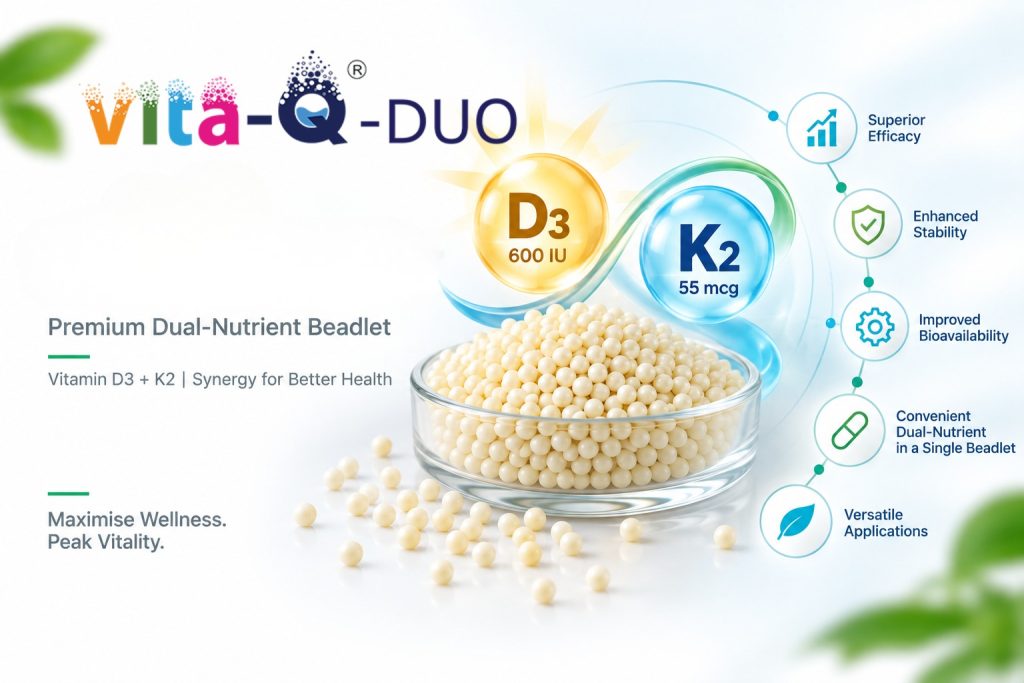
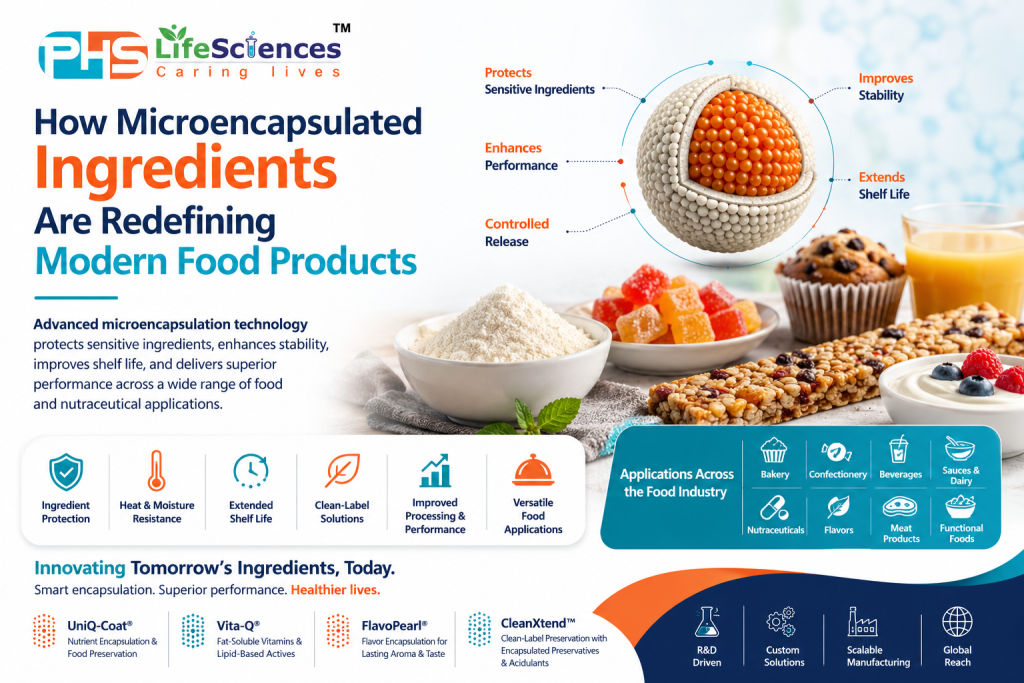
Food manufacturers today are expected to deliver products that offer more than taste and convenience. Consumers increasingly seek foods that are nutritious, clean-label, longer-lasting, and consistent in quality. At the same time, manufacturers face the challenge of preserving sensitive ingredients throughout processing, transportation, and storage without compromising product performance. This is where microencapsulated ingredients are transforming modern food formulation. Microencapsulation is no longer limited to pharmaceutical applications. It has become an important technology in the food and nutraceutical industries, enabling manufacturers to protect sensitive ingredients such as vitamins, flavors, preservatives, acids, and specialty nutrients. By surrounding these ingredients with a protective coating, microencapsulation helps improve stability, handling, and application performance across a wide range of food products. According to the PHS Life Sciences corporate presentation, the company has developed multiple proprietary microencapsulation platforms—UniQ-Coat®, Vita-Q®, FlavoPearl®, and CleanXtend™—to address different formulation challenges across nutraceuticals, bakery, confectionery, beverages, meat products, and food preservation. These technologies are designed to provide customized solutions for ingredient protection and controlled functionality in food applications. As consumer expectations evolve and food formulations become increasingly complex, microencapsulated ingredients are helping manufacturers create products that are more stable, more efficient to manufacture, and better suited to today’s competitive market. What Are Microencapsulated Ingredients? Quick Answer: Microencapsulated ingredients are active food or nutraceutical ingredients enclosed within a protective coating. This coating helps shield the ingredient from environmental conditions such as heat, moisture, oxygen, and light while supporting improved handling and formulation performance. Think of microencapsulation as providing each ingredient with its own protective shell. Instead of leaving sensitive materials directly exposed during manufacturing, storage, or transportation, the encapsulation layer acts as a barrier that helps maintain ingredient integrity until it reaches its intended application. Depending on the formulation objective, microencapsulation can support: Ingredient stability Improved powder flow Reduced ingredient interactions Better processing compatibility Enhanced shelf-life performance Controlled release under specific conditions Rather than changing the functionality of an ingredient, the technology focuses on protecting it throughout the product lifecycle. Why Modern Food Products Need Better Ingredient Protection Quick Summary: Modern food products contain increasingly sensitive ingredients that must remain stable throughout processing and storage. Microencapsulation provides an effective way to protect these ingredients while supporting manufacturing efficiency and product quality. Today’s food formulations are significantly more sophisticated than they were a decade ago. Consumers demand products that combine nutrition, taste, convenience, and clean-label positioning—all while maintaining consistent quality. Manufacturers are now incorporating a broad range of functional ingredients into everyday foods, including: Vitamins Natural flavors Plant extracts Organic acids Natural preservatives Antioxidants Omega fatty acids Specialty nutrients Many of these ingredients are highly sensitive to environmental conditions. Without appropriate protection, they may encounter challenges during: High-temperature processing Long production cycles Exposure to oxygen Humid storage environments Mechanical mixing Transportation Extended shelf life As formulations become more advanced, ingredient technology plays an increasingly important role in supporting overall product performance. Common Challenges in Food Ingredient Formulation Developing innovative food products involves balancing multiple technical requirements simultaneously. Manufacturers must ensure that ingredients perform consistently from production through consumption. Some of the most common formulation challenges include: Heat Sensitivity Processes such as baking, drying, roasting, blending, and extrusion may expose ingredients to elevated temperatures. Heat-sensitive ingredients can experience degradation if they are insufficiently protected during manufacturing. Moisture Exposure Humidity remains one of the most significant challenges in food manufacturing. Ingredients stored in powder form may absorb moisture, affecting their stability, flowability, or compatibility with other ingredients. Oxidation Exposure to oxygen can influence the stability of certain nutrients, flavors, and bioactive compounds over time. Reducing oxidation is particularly important for ingredients intended for products with extended shelf-life expectations. Ingredient Interactions Modern formulations frequently combine numerous active ingredients within a single product. Examples include: Vitamins Minerals Organic acids Botanical extracts Natural flavors Sweeteners Functional proteins These ingredients may interact with one another under certain formulation conditions, making compatibility an important consideration during product development. Shelf-Life Expectations Consumers expect products to remain consistent throughout their intended shelf life. Manufacturers therefore require ingredient technologies that help support product quality during storage and distribution. How Microencapsulation Works Quick Summary: Microencapsulation surrounds an ingredient with a carefully engineered protective coating that shields it from external environmental conditions while maintaining its intended functionality within the formulation. Although encapsulation technologies vary depending on the application, the underlying objective remains consistent: protect the active ingredient until it performs its intended role. The general process involves: Selecting the active ingredient. Applying a protective coating using specialized encapsulation technology. Producing free-flowing particles or beadlets. Incorporating the encapsulated ingredient into the desired food or nutraceutical formulation. The protective coating serves as a barrier against environmental stress while improving ingredient handling during manufacturing. Key Benefits of Microencapsulated Ingredients Food manufacturers increasingly choose microencapsulated ingredients because they offer advantages beyond simple ingredient protection. 1. Improved Stability Microencapsulation helps reduce exposure to: Heat Moisture Oxygen Light This additional protection supports ingredient stability during manufacturing and storage. 2. Better Manufacturing Efficiency Manufacturing teams benefit from ingredients that are easier to process. Microencapsulated powders often provide: Improved flowability Easier weighing Uniform blending Reduced dust formation Better handling characteristics These properties can contribute to more consistent production processes. 3. Enhanced Product Consistency Uniform ingredient distribution is essential for maintaining product quality. Microencapsulated ingredients are designed to support consistent incorporation into formulations, helping manufacturers achieve reliable batch-to-batch performance. 4. Reduced Ingredient Losses Sensitive ingredients may be affected by harsh processing conditions. Protective encapsulation helps reduce direct exposure to environmental stress, supporting more efficient use of valuable ingredients. 5. Greater Formulation Flexibility Microencapsulated ingredients can be incorporated into a wide variety of food products, including: Bakery products Confectionery Functional beverages Nutritional powders Gummies Meal replacements Dairy alternatives Dietary supplements This flexibility allows manufacturers to innovate across multiple product categories using advanced ingredient technologies. Industries Benefiting from Microencapsulation Microencapsulation is now used across multiple sectors of the food industry. According to the PHS Life Sciences corporate presentation, the company’s technologies support applications in: Food and Nutrition Bakery Confectionery Flavors Beverages Nutraceuticals Meat Products Dietary
Beyond Potency: Smarter Delivery of Fat-Soluble Vitamins with Microencapsulation
Beyond Potency: Smarter Delivery of Microencapsulated Fat-Soluble Vitamins Consumers today expect more from nutraceuticals than simply meeting a label claim. They look for products that are consistent, convenient, and capable of maintaining quality throughout their shelf life. For manufacturers, this means developing formulations that not only contain the right nutrients but also ensure those nutrients remain stable during processing, storage, and consumption. Microencapsulated Fat-Soluble Vitamins have emerged as an effective solution for maintaining ingredient stability and supporting consistent product performance. When it comes to fat-soluble vitamins, achieving this balance is often more challenging than it appears. Vitamins A, D, E, and K play essential roles in human health and are widely used in dietary supplements, functional foods, fortified beverages, gummies, and medical nutrition products. However, these vitamins are naturally sensitive to environmental conditions such as heat, oxygen, moisture, and light. During manufacturing and storage, these factors can affect ingredient stability and create formulation challenges. Microencapsulated Fat-Soluble Vitamins help protect these sensitive nutrients from environmental stress while improving formulation stability. This is where advanced delivery technologies become increasingly important. Rather than focusing solely on vitamin potency, modern product developers evaluate how well an ingredient performs throughout its entire lifecycle—from manufacturing to the finished product. Microencapsulated Fat-Soluble Vitamins have emerged as one of the most effective approaches for protecting sensitive nutrients while improving formulation performance, handling, and shelf-life stability. According to the PHS Life Sciences corporate presentation, the company’s Vita-Q® Technology produces uniform microencapsulated beadlets for Microencapsulated Fat-Soluble Vitamins that are designed to provide protection against oxidation, heat, moisture, and light while remaining water-soluble for nutraceutical and food applications. Why Fat-Soluble Vitamins Present Formulation Challenges Unlike water-soluble vitamins, fat-soluble vitamins dissolve in lipids rather than water. While this property makes them biologically important, it also introduces several formulation complexities. Throughout manufacturing, transportation, and storage, vitamin ingredients may be exposed to: Heat during processing Moisture during storage Oxygen from the surrounding environment Light exposure Interactions with minerals and other active ingredients These conditions can influence ingredient stability and processing performance. For formulators, the challenge extends beyond selecting the correct vitamin source. They must also ensure that the ingredient remains compatible with the intended dosage form and manufacturing process. For example, a vitamin ingredient used in a tablet formulation may face very different processing conditions compared to one intended for a fortified beverage or gummy supplement. Each application requires careful consideration of stability, handling, and formulation compatibility. Why Potency Alone Is No Longer Enough Historically, manufacturers often evaluated vitamin ingredients primarily by their declared potency. While potency remains important, today’s formulation scientists recognize that it represents only one aspect of ingredient performance. A vitamin with a high assay value may still encounter stability issues if it is exposed to adverse manufacturing conditions. As a result, modern product development focuses on additional parameters such as: Stability during processing Compatibility with other ingredients Powder flow characteristics Moisture resistance Oxidation protection Shelf-life performance Ease of incorporation into different dosage forms These factors directly influence manufacturing efficiency and final product quality. Instead of asking, “How potent is this vitamin?” manufacturers increasingly ask, “How will this ingredient perform throughout the entire product lifecycle?” The Science Behind Microencapsulation Microencapsulation is an advanced ingredient technology in which tiny particles of an active ingredient are surrounded by a protective coating. This protective layer serves several purposes. It helps shield sensitive ingredients from external environmental conditions while improving their handling and compatibility during manufacturing. Rather than leaving vitamins directly exposed to oxygen, moisture, or light, microencapsulation creates a physical barrier that helps maintain ingredient integrity. The technology does not alter the nutritional identity of the vitamin itself. Instead, it focuses on improving the ingredient’s physical performance during formulation and storage. How Microencapsulation Supports Better Vitamin Delivery Microencapsulation offers several formulation advantages that make it increasingly valuable for nutraceutical manufacturers. Enhanced Stability One of the primary benefits of microencapsulation is improved protection against environmental stress. The protective coating helps reduce exposure to: Oxygen Moisture Heat Light This additional protection can contribute to improved ingredient stability throughout manufacturing and storage. Better Powder Handling Manufacturing efficiency depends heavily on ingredient handling characteristics. Microencapsulated beadlets generally provide: Improved flowability Easier blending Better dosing consistency Reduced dust generation These characteristics can simplify production while improving process consistency. Reduced Ingredient Interactions Modern nutraceutical formulations often combine multiple active ingredients within a single product. These may include: Vitamins Minerals Botanical extracts Amino acids Probiotics Functional ingredients Direct interactions between ingredients may influence formulation stability. Microencapsulation provides an additional protective barrier that can help reduce these interactions. Greater Application Flexibility Microencapsulated ingredients are suitable for numerous dosage formats, including: Tablets Capsules Gummies Powder premixes Functional beverages Meal replacement products Functional foods This flexibility enables manufacturers to develop diverse product portfolios using similar ingredient technologies. Understanding Vita-Q® Technology To address the growing demand for advanced nutrient delivery, PHS Life Sciences has developed Vita-Q® Technology, a proprietary microencapsulation platform focused on fat-soluble vitamins and lipid-based active ingredients. According to the company’s presentation, Vita-Q® produces water-soluble microencapsulated beadlets designed to provide protection against oxidation, heat, moisture, and light. The platform supports nutraceutical and food applications where ingredient stability and formulation performance are important. The presentation also lists Vita-Q® products for: Vitamin A Vitamin D2 Vitamin D3 Vitamin K2 DHA Astaxanthin These products are intended for applications across dietary supplements, functional foods, and fortified beverages. Applications Across Modern Nutraceuticals As consumer preferences evolve, manufacturers are developing increasingly diverse nutritional products. Ingredient technologies must therefore support a broad range of formulations. Dietary Supplements Tablets and capsules remain among the most widely used dosage forms due to their convenience and manufacturing efficiency. For these products, formulators prioritize: Uniform blending Stable ingredients Consistent quality Reliable processing performance Gummies Gummy supplements continue to experience strong market demand because of their taste and ease of consumption. However, gummy manufacturing involves moisture and elevated processing temperatures, making ingredient stability particularly important. Microencapsulated vitamins may help support formulation performance under these conditions. Functional Beverages Consumers increasingly seek beverages that provide added
The Science Behind Taste Masking in Nutraceuticals: Enhancing Consumer Experience Without Compromising Efficacy
Introduction Taste Masking in Nutraceuticals The nutraceutical industry has evolved rapidly over the last decade, driven by consumers who want products that support immunity, energy, gut health, and overall wellness. However, there is one challenge that continues to stand in the way of consumer satisfaction—taste. Many vitamins, minerals, botanical extracts, amino acids, and probiotics naturally possess bitter, metallic, sour, or earthy flavours that make daily consumption unpleasant. This is where Taste Masking in Nutraceuticals becomes a game-changing innovation. Think about it—would you continue taking a supplement every day if every serving left an unpleasant aftertaste? Most people wouldn’t. Consumer experience plays a vital role in product success, and manufacturers are increasingly investing in advanced Taste Masking Technology to make nutraceutical products both effective and enjoyable. Why Taste Masking in Nutraceuticals Matters More Than Ever Today’s consumers expect more than just health benefits—they expect convenience, pleasant taste, and consistent quality. Whether it’s gummies, chewable tablets, sachets, powders, or functional beverages, taste directly impacts repeat purchases. Imagine giving a child a vitamin supplement that tastes bitter. Chances are they’ll refuse the second dose. The same applies to adults who consume protein powders or herbal supplements daily. If the taste isn’t pleasant, adherence decreases significantly. The importance of Taste Masking in Nutraceuticals extends beyond flavour enhancement. It helps manufacturers: Improve consumer compliance Increase repeat purchases Enhance brand reputation Expand product formats Improve overall user experience A product can contain the best Nutraceutical Ingredients, but if consumers dislike its taste, its health benefits may never be fully realised. How Taste Masking in Nutraceuticals Works Taste masking isn’t simply about adding sugar or artificial flavours. Modern Taste Masking Solutions rely on advanced science that controls how active ingredients interact with taste receptors. Common Causes of Unpleasant Taste Several nutraceutical ingredients naturally produce undesirable flavours: Minerals like iron and zinc create metallic notes. Botanical extracts often taste bitter. Amino acids may produce sulphurous flavours. Certain probiotics contribute sour characteristics. Plant-based compounds can leave lingering aftertastes. Instead of masking these flavours with excessive sweeteners, manufacturers use innovative technologies to prevent taste receptors from detecting them immediately. Popular Taste Masking Techniques Flavour modulation Sweetener optimisation Coating technologies Lipid encapsulation Polymer coatings Cyclodextrin complexation Microencapsulation Technology Each method is selected depending on ingredient properties, dosage form, stability requirements, and consumer expectations. Taste Masking in Nutraceuticals Through Microencapsulation Technology Among all available methods, Microencapsulation Technology has become one of the most effective solutions for improving flavour while maintaining ingredient stability. Microencapsulation surrounds active ingredients with a protective coating that shields them from taste receptors until they reach the digestive system. Think of it as wrapping a bitter medicine inside a tiny invisible capsule. Consumers experience pleasant taste, while the body still receives the intended nutritional benefits. Benefits of Microencapsulation Reduces bitterness Minimises metallic taste Improves ingredient stability Protects sensitive vitamins Enhances shelf life Supports controlled release Improves powder flowability Increases formulation flexibility This makes Microencapsulation in Nutraceuticals especially valuable for ingredients that are sensitive to moisture, oxygen, heat, or light. The Role of Taste Masking in Nutraceuticals Across Different Dosage Forms Consumer preferences continue to diversify. Modern nutraceutical brands no longer produce only capsules. Today, products are available as: Gummies Effervescent tablets Functional beverages Protein powders Stick packs Oral strips Chewable tablets Soft chews Each dosage form presents unique taste challenges. Gummies Consumers expect fruit-like flavours. Bitter botanicals must remain completely hidden. Functional Beverages Ingredients dissolve instantly, making flavour balancing critical. Protein Powders Plant proteins often have earthy or grassy notes requiring sophisticated Nutraceutical Taste Masking strategies. Chewable Tablets Because they stay longer in the mouth, effective Taste Masking in Nutraceuticals becomes even more important. Manufacturers carefully combine flavour systems, sweeteners, acids, and Encapsulated Nutraceutical Ingredients to create a pleasant sensory profile. Conclusion Consumer expectations continue to evolve, making product experience just as important as nutritional performance. Taste Masking in Nutraceuticals has become a critical component of modern product development, allowing manufacturers to deliver supplements that consumers genuinely enjoy taking without compromising efficacy. From advanced Microencapsulation Technology to innovative Taste Masking Solutions, today’s formulation strategies improve flavour, protect sensitive ingredients, enhance stability, and support long-term consumer compliance. As nutraceutical innovation accelerates, companies investing in effective Taste Masking in Nutraceuticals will be better positioned to deliver products that combine science, quality, and exceptional consumer satisfaction. Call to Action: Looking to develop nutraceutical products with superior taste, stability, and performance? Explore advanced Microencapsulation in Nutraceuticals and innovative Taste Masking Technology solutions to create consumer-friendly formulations that stand out in today’s competitive market. You can also explore our related resources on Microencapsulated Vitamins, Encapsulated Nutraceutical Ingredients, and advanced Nutraceutical Formulation strategies to learn more.
International Tea Day 2026: Innovation Brewing in Every Sip
Tea has always been more than just a comforting beverage. It represents culture, tradition, wellness, and connection across continents. As International Tea Day 2026 approaches, the global tea industry is entering an exciting new chapter where innovation meets consumer expectations. From functional ingredients and clean-label formulations to sustainable sourcing and advanced encapsulation technologies, every cup tells a story of progress. Whether you’re a beverage manufacturer, bakery brand, nutraceutical company, confectionery producer, distributor, procurement specialist, or R&D professional, International Tea Day 2026 is the perfect opportunity to explore how innovation is transforming one of the world’s oldest beverages into tomorrow’s wellness solution. Why International Tea Day 2026 Matters More Than Ever Consumer habits have changed dramatically over the past few years. Modern buyers don’t simply choose tea because it tastes good—they expect additional health benefits, sustainability, convenience, and premium experiences. Today’s consumers look for: Functional wellness benefits Natural ingredients Low-sugar formulations Plant-based products Sustainable packaging Authentic global flavours These expectations are encouraging manufacturers to rethink tea innovation from the ground up. For companies across APAC, SEA, MENA, CIS, Africa, Europe, and the USA, International Tea Day 2026 represents more than a celebration—it’s a strategic opportunity to launch innovative products that align with changing consumer preferences. International Tea Day 2026 and the Rise of Functional Tea The line between beverages and nutrition continues to blur. Tea is no longer viewed as just a refreshing drink; it has become a delivery system for health-enhancing ingredients. Popular Functional Tea Trends Immune-support teas Energy-boosting herbal blends Relaxation and sleep formulations Digestive wellness teas Beauty-from-within beverages Protein-enriched tea drinks Manufacturers are increasingly incorporating ingredients such as: Adaptogens Botanical extracts Vitamins Minerals Probiotics Antioxidants Collagen The challenge? Maintaining flavour, stability, and shelf life while preserving ingredient efficacy. This is where modern ingredient technologies play an important role. Imagine enjoying a calming chamomile tea infused with probiotics that still tastes smooth after months on the shelf. That’s innovation in action. How International Tea Day 2026 Inspires Ingredient Innovation Behind every successful tea product lies months of research, formulation, testing, and collaboration. Research and development teams are focusing on technologies that improve both product performance and consumer experience. Key Areas of Innovation Microencapsulation Protects sensitive nutrients from heat, moisture, and oxidation while improving taste. Natural Flavour Masking Helps reduce bitterness associated with botanical extracts and functional ingredients. Controlled Release Systems Allows ingredients to release gradually, improving effectiveness. Improved Solubility Ensures powdered tea mixes dissolve quickly without affecting texture. Shelf-Life Enhancement Maintains flavour and nutritional value for longer periods. It’s often said that “good things come to those who wait,” but today’s consumers expect instant quality. Innovative ingredient technologies help brands deliver exactly that. Sustainability Takes Centre Stage During International Tea Day 2026 Innovation isn’t limited to what’s inside the cup. Consumers increasingly care about how products are sourced, manufactured, and packaged. Across global markets, sustainable practices are becoming competitive advantages rather than optional initiatives. Examples include: Responsibly sourced tea leaves Ethical farming partnerships Reduced carbon emissions Water-efficient processing Biodegradable packaging Recyclable tea sachets Large beverage companies and emerging brands alike are investing in environmentally responsible production because consumers reward transparency. A tea brand that openly shares its sustainability journey often builds stronger customer trust than one that focuses only on price. After all, every sip should feel good—not just taste good Innovation Opportunities for Food, Beverage and Nutraceutical Industries Tea innovation now extends beyond beverages. Manufacturers are incorporating tea ingredients into numerous applications. Food & Bakery Matcha cakes Tea-flavoured cookies Green tea breads Confectionery Tea-infused chocolates Herbal gummies Functional candies Nutraceuticals Tea extract capsules Wellness powders Functional drink mixes Beverage Industry Sparkling tea Protein tea Energy tea Botanical infusions Procurement Teams Can source innovative ingredients that improve product quality while supporting sustainability goals. R&D Professionals Continue developing exciting formulations that combine consumer appeal with scientific innovation. Real-world success often starts with a simple question: What if tea could do more? That curiosity is driving some of the industry’s most exciting breakthroughs. Conclusion Tea has travelled an extraordinary journey—from ancient traditions to advanced food science—and its evolution is far from over. International Tea Day 2026 reminds us that innovation, sustainability, and consumer wellness can successfully blend into every cup. Businesses across food, bakery, nutraceutical, beverage, confectionery, distribution, procurement, and R&D have an opportunity to create products that deliver exceptional taste and meaningful health benefits. By embracing innovation today, brands can build stronger customer relationships and stay ahead in tomorrow’s marketplace.
Vita-Q Duo®: Synergy Reimagined
Innovation in nutraceuticals isn’t just about discovering new ingredients anymore—it’s about improving how existing ingredients perform in real-world formulations. Vita-Q Duo®: Synergy Reimagined represents this next generation of ingredient innovation by combining science, stability, and functionality into one advanced solution. As consumers become more health-conscious, manufacturers across food, bakery, beverage, confectionery, and dietary supplement industries are searching for ingredients that deliver measurable value while maintaining product quality. Whether you’re an R&D specialist developing a functional beverage or a procurement manager sourcing premium ingredients, Vita-Q Duo®: Synergy Reimagined offers an exciting opportunity to create products that stand apart in an increasingly competitive market. What Makes Vita-Q Duo®: Synergy Reimagined Different? The nutraceutical industry is evolving rapidly. Consumers today don’t simply purchase supplements—they invest in wellness experiences. They expect ingredients to be effective, stable, easy to formulate, and pleasant to consume. This is exactly where Vita-Q Duo®: Synergy Reimagined creates value. Rather than treating Coenzyme Q10 as a conventional ingredient, this innovative solution enhances formulation possibilities through advanced delivery technology and superior ingredient performance. Key advantages include: Enhanced ingredient stability Improved formulation flexibility Better processing compatibility Consistent product quality Extended application possibilities Premium ingredient positioning Instead of forcing manufacturers to compromise between efficacy and manufacturability, Vita-Q Duo®: Synergy Reimagined bridges both worlds. Why Vita-Q Duo®: Synergy Reimagined Matters for Modern Formulations Every formulation scientist understands the challenge. An ingredient may demonstrate excellent scientific potential, yet become difficult during production due to stability, dispersion, oxidation, or processing limitations. Imagine spending months developing a premium functional beverage only to discover that the active ingredient loses performance during manufacturing. That’s a frustrating—and expensive—lesson. Vita-Q Duo®: Synergy Reimagined helps reduce these formulation challenges by supporting ingredient integrity throughout production. Benefits include: Greater formulation consistency Enhanced ingredient protection Better compatibility across applications Reliable manufacturing performance Premium finished products This makes development smoother for R&D teams while helping procurement professionals source ingredients that align with long-term quality goals. Applications Across Multiple Industries One of the strongest advantages of Vita-Q Duo®: Synergy Reimagined is its versatility. Nutraceutical Supplements Ideal for: Capsules Tablets Gummies Softgels Powders Sachets Manufacturers can develop premium wellness products without compromising ingredient quality. Functional Beverages Consumers increasingly expect drinks that offer more than hydration. Potential applications include: Energy beverages Wellness drinks Sports nutrition Functional juices Ready-to-drink beverages Stable ingredient performance supports consistent product quality. Bakery Products Functional bakery is becoming increasingly popular. Possible applications include: Nutrition bars Protein cookies Healthy biscuits Breakfast products Ingredient stability is particularly valuable during processing. Confectionery Health-focused confectionery continues to grow. Applications include: Functional chocolates Gummies Chews Fortified candies Consumers enjoy wellness without sacrificing convenience. The Science Behind Vita-Q Duo®: Synergy Reimagined Innovation begins with science. Coenzyme Q10 has long been recognised for its importance in cellular energy production and antioxidant activity. However, incorporating CoQ10 into food and nutraceutical products often presents formulation challenges. Vita-Q Duo®: Synergy Reimagined addresses these issues through advanced ingredient engineering designed to optimise stability and processing performance. Key scientific considerations include: Enhanced Stability Better protection during manufacturing and storage. Improved Process Compatibility Suitable for multiple production environments. Better Ingredient Distribution Supports consistent formulation throughout finished products. Premium Ingredient Quality Maintains high manufacturing standards expected by global brands. For formulators, these characteristics simplify product development while helping maintain quality across production batches. Why Healthcare Professionals and Manufacturers Appreciate Vita-Q Duo®: Synergy Reimagined Healthcare professionals increasingly recommend evidence-based nutrition supported by high-quality ingredients. Manufacturers, meanwhile, need ingredients that perform reliably at scale. Vita-Q Duo®: Synergy Reimagined helps satisfy both expectations. Healthcare professionals appreciate: Quality-focused ingredient innovation Consistent formulation Scientific credibility Manufacturers value: Easier production Reliable ingredient sourcing Improved product differentiation Better manufacturing efficiency Distributors also benefit from offering an innovative ingredient solution that meets growing global demand. Target industries include: Nutraceutical manufacturers Functional food companies Beverage brands Bakery manufacturers Confectionery companies Ingredient distributors Target regions: APAC Southeast Asia MENA CIS Africa Europe USA Supporting Innovation Across Global Markets Consumer expectations are changing everywhere. A shopper in Singapore may seek convenient daily wellness. A sports enthusiast in Germany might prioritise premium nutrition. A family in the UAE could be searching for functional food products that fit modern lifestyles. Although consumer preferences differ, one expectation remains constant—quality. That’s why ingredient innovation matters. Vita-Q Duo®: Synergy Reimagined enables manufacturers to create differentiated products that resonate across international markets while maintaining formulation consistency. Whether developing new product lines or upgrading existing formulations, innovative ingredients help brands remain competitive. Conclusion The future of nutraceutical innovation lies in ingredients that combine science, stability, functionality, and manufacturing efficiency. Vita-Q Duo®: Synergy Reimagined delivers exactly that by helping formulators develop premium products for food, bakery, beverage, confectionery, and dietary supplement applications. As consumer expectations continue to rise across APAC, SEA, MENA, CIS, Africa, Europe, and the USA, choosing advanced ingredient solutions can become a genuine competitive advantage. If your organisation is looking to create next-generation wellness products, Vita-Q Duo®: Synergy Reimagined deserves serious consideration.
How Encapsulated Flavours Enable Better Effervescent, ORS, Sachets & Powder Dose Formats
Effervescent, ORS sachets and powder dose formats are gaining rapid acceptance across nutraceutical and hydration markets due to their convenience, fast dissolution, and improved consumer experience.However, these formats also present significant formulation challenges, particularly around flavour stability, taste masking, moisture sensitivity, and batch-to-batch consistency. At PHS Lifesciences, we address these challenges through advanced encapsulated flavour technology, engineered specifically for effervescent, ORS and powdered nutraceutical applications. Our encapsulated flavours are designed to enhance taste while supporting flavour stability and uniform sensory performance over the product’s shelf life. Formulation Challenges in Effervescent, ORS & Powder Formats Effervescent ORS typically contain electrolytes, minerals, acids, and bicarbonates, all of which are highly reactive and sensorially aggressive. Nutra manufacturers commonly face: Strong off-tastes from electrolytes such as sodium, potassium, and magnesium Premature flavour loss due to moisture ingress during storage Flavour degradation caused by acidic–alkaline interactions Taste inconsistency due to segregation or uneven flavour distribution Early effervescence activation, reducing performance at consumption Conventional liquid or spray-dried flavours often fail under these conditions, leading to poor sensory quality and reduced consumer compliance. PHS Lifesciences Encapsulated Flavours: Built for Effervescence PHS Lifesciences (FlavoPearl®) encapsulated flavours are specifically engineered to withstand the harsh environment of effervescent, ORS and powder formulations. Our technology delivers multiple functional advantages: Barrier protection: Encapsulation shields flavour compounds from moisture, acids, salts, and minerals Controlled flavour release: Flavours remain stable in dry form and release only upon dissolution Reduced ingredient interaction: FlavoPearl® encapsulated flavour system minimises premature interaction with reactive effervescent components (such as citric acid and sodium bicarbonate), helping maintain flavour integrity during processing and storage. Enhanced shelf-life stability: Maintains flavour intensity and freshness across the product lifecycle The result is a consistent, clean, and refreshing taste experience in every sip. Our Nutra Flavour Portfolio At PHS Lifesciences, we offer a wide range of microencapsulated flavours for nutraceutical applications: Effervescent, ORS & Powder: Orange, Lemon, Lime, Bergamot Flavours for nutra / protein powder products: Vanilla, Chocolate, Coffee These flavours are designed for taste masking, stability, and controlled release, ensuring superior consumer acceptance even in challenging formulations. Manufacturing & Dose Format Benefits From a production standpoint, FlavoPearl® encapsulated flavours are optimised for powder processing and sachet formats: Free-flowing granules for uniform blending Reduced segregation during handling and transport High compatibility with automated sachet filling lines Improved batch-to-batch consistency These advantages simplify scale-up and ensure formulation reliability in commercial manufacturing. Stability in Humid & Tropical Conditions Many ORS products are distributed in humid and tropical regions. FlavoPearl® encapsulated flavours help maintain product integrity by: Minimising moisture uptake Preventing flavour volatilisation Minimises flavour degradation and off-notes in acidic powder formulations such as ORS and electrolyte blends. This helps maintain flavour profile consistency and release performance throughout shelf life, while remaining compatible with effervescent ORS and beverage systems. Conclusion FlavoPearl® from PHS Life Sciences delivers protected flavour performance where conventional flavours fail. Specifically designed for challenging ORS sachets and powder hydration systems, FlavoPearl® help maintain flavour integrity, improves taste masking, and enhances overall consumer acceptance—without compromising product stability. By leveraging advanced microencapsulation technology, FlavoPearl® enables consistent flavour release and reliable performance across demanding nutraceutical formulations, supporting the development of effective and consumer-preferred hydration products. Effervescent, ORS sachets and powder dose formats are gaining rapid acceptance across nutraceutical and hydration markets due to their convenience, fast dissolution, and improved consumer experience.However, these formats also present significant formulation challenges, particularly around flavour stability, taste masking, moisture sensitivity, and batch-to-batch consistency. At PHS Lifesciences, we address these challenges through advanced encapsulated flavour technology, engineered specifically for effervescent, ORS and powdered nutraceutical applications. Our encapsulated flavours are designed to enhance taste while supporting flavour stability and uniform sensory performance over the product’s shelf life. Formulation Challenges in Effervescent, ORS & Powder Formats Effervescent ORS typically contain electrolytes, minerals, acids, and bicarbonates, all of which are highly reactive and sensorially aggressive. Nutra manufacturers commonly face: Strong off-tastes from electrolytes such as sodium, potassium, and magnesium Premature flavour loss due to moisture ingress during storage Flavour degradation caused by acidic–alkaline interactions Taste inconsistency due to segregation or uneven flavour distribution Early effervescence activation, reducing performance at consumption Conventional liquid or spray-dried flavours often fail under these conditions, leading to poor sensory quality and reduced consumer compliance. PHS Lifesciences Encapsulated Flavours: Built for Effervescence PHS Lifesciences (FlavoPearl®) encapsulated flavours are specifically engineered to withstand the harsh environment of effervescent, ORS and powder formulations. Our technology delivers multiple functional advantages: Barrier protection: Encapsulation shields flavour compounds from moisture, acids, salts, and minerals Controlled flavour release: Flavours remain stable in dry form and release only upon dissolution Reduced ingredient interaction: FlavoPearl® encapsulated flavour system minimises premature interaction with reactive effervescent components (such as citric acid and sodium bicarbonate), helping maintain flavour integrity during processing and storage. Enhanced shelf-life stability: Maintains flavour intensity and freshness across the product lifecycle The result is a consistent, clean, and refreshing taste experience in every sip Our Nutra Flavour Portfolio At PHS Lifesciences, we offer a wide range of microencapsulated flavours for nutraceutical applications: Effervescent, ORS & Powder: Orange, Lemon, Lime, Bergamot Flavours for nutra / protein powder products: Vanilla, Chocolate, Coffee These flavours are designed for taste masking, stability, and controlled release, ensuring superior consumer acceptance even in challenging formulations. Manufacturing & Dose Format Benefits From a production standpoint, FlavoPearl® encapsulated flavours are optimised for powder processing and sachet formats: Free-flowing granules for uniform blending Reduced segregation during handling and transport High compatibility with automated sachet filling lines Improved batch-to-batch consistency These advantages simplify scale-up and ensure formulation reliability in commercial manufacturing. Stability in Humid & Tropical Conditions Many ORS products are distributed in humid and tropical regions. FlavoPearl® encapsulated flavours help maintain product integrity by: Minimising moisture uptake Preventing flavour volatilisation Minimises flavour degradation and off-notes in acidic powder formulations such as ORS and electrolyte blends. This helps maintain flavour profile consistency and release performance throughout shelf life, while remaining compatible with effervescent ORS and beverage systems. Conclusion FlavoPearl® from PHS Life Sciences delivers protected flavour performance where conventional flavours fail. Specifically designed for challenging ORS sachets and powder hydration systems, FlavoPearl® help maintain flavour integrity, improves taste masking, and enhances overall consumer acceptance—without compromising product stability. By leveraging advanced microencapsulation technology, FlavoPearl® enables consistent flavour release and reliable performance across demanding nutraceutical formulations, supporting the development of effective and consumer-preferred hydration products.
Understanding Fat-soluble Vitamins: How A, D, E and K Shape Modern Nutrition
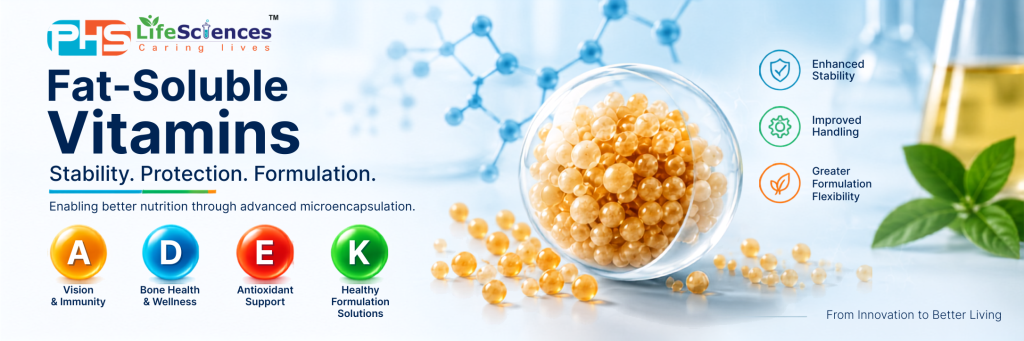
Fat-soluble vitamins A, D, E, and K—play a key role in long-term wellness. They influence bone strength, immunity, cardiovascular health, vision, and cellular protection. Because they dissolve in fat, they behave differently during digestion and require special care during manufacturing. Heat, oxygen and moisture can easily degrade them, which is why nutraceutical brands often depend on protective technologies and stable raw-material formats. At PHS Lifesciences, our Vita-Q® microencapsulation platform helps brands use these vitamins across tablets, capsules, gummies, beverages, premixes and powders without losing potency. Here’s a deeper look at how these vitamins work, why they matter, and the formats they are available in. Vitamin D: D2, D3 and Why D3 Leads the Industry Vitamin D comes mainly as D2 (ergocalciferol) from plant sources and D3 (cholecalciferol) from animal sources or lichen. D3 is more effective at maintaining optimal vitamin D levels, so it is used more widely in supplements. Once consumed, vitamin D converts into calcitriol, the active form that helps regulate calcium absorption, bone mineralization and immune function. Formats and Applications: Oil-based vitamin D3 is used in softgels. Dry D3 powders and beadlets are used in gummies, tablets and premixes. Water-dispersible microencapsulated D3 is used in capsules, beverages, sachets and effervescents. Vitamin K: K1, K2 and Why MK-7 Is Preferred Vitamin K1 comes from leafy greens, while K2—especially MK-7—is produced from fermented foods and is better absorbed. MK-7 stays in the body longer and activates proteins that support both bone and cardiovascular health. Vitamin K2 activates osteocalcin, which helps bind calcium to bones, and matrix Gla protein (MGP), which prevents calcium from depositing in arteries. Vitamin K2 for Women’s Health: Bone and Heart Support During Menopause During peri-menopause and menopause, declining estrogen affects bone turnover and calcium metabolism. This increases the risk of bone loss and arterial stiffness. Vitamin K2 MK-7 becomes particularly valuable because it ensures calcium is directed into bones while keeping arteries flexible. It strengthens bone density, supports cardiovascular health, and pairs well with vitamin D3 to maintain balanced calcium regulation. Formats and Applications: Oil-based K2 MK-7 is used in softgels. Dry K2 MK-7 powders and granules are used in gummies, tablets and premixes. Microencapsulated K2 is used in capsules,beverages, sachets, and powdered mixes. Vitamin A: Vision, Immunity and Skin Health Vitamin A supports vision, immune strength and cell integrity. It is available as retinol (animal derived) and beta-carotene (plant derived). Formats and Applications: Retinyl acetate and palmitate oils are used in softgels. Beta-carotene beadlets are used in gummies, tablets and blends. Microencapsulated vitamin A is used in capsules, beverages and powders. Vitamin E: Antioxidant and Cell Protection Vitamin E protects cells from oxidative stress and supports cardiovascular and skin health. Formats and Applications: Tocopherol oils are used in softgels. Dry vitamin E powders are used in gummies, tablets and premixes. Water-dispersible tocopherol granules are used in capsules, beverages and sachets. How These Vitamins Work Together Vitamin D3 and K2 work together to support bone strength and cardiovascular health by directing calcium to the right places. Vitamin A and E complement this by supporting tissue integrity and protecting cells from oxidative stress. Why Encapsulation Matters for Fat-soluble Vitamins Fat-soluble vitamins degrade quickly during manufacturing. Microencapsulation protects them from heat, moisture and oxidation, ensures consistent dosing, and improves bioavailability. PHS Lifesciences uses this approach to create stable beadlets and dispersible formats for gummies, powders, drinks and functional foods. How PHS Lifesciences Solves These Issues Our Vita-Q® platform is built specifically for fat-soluble vitamins like D, K, A and other nutraceutical actives. Through microencapsulation, we convert these ingredients into water-dispersible, highly stable beadlets that perform well across a wide range of applications. Vita-Q® offers: Stability during high-temperature processes Longer shelf life Improved bioavailability Clean dispersion in both powders and liquids Accurate and consistent dosing Scalable and cost-effective production This gives brands the freedom to innovate without worrying about degradation or processing losses.
Smarter Food Ingredients: How Preservatives, Acidulants, and Leavening Agents Shape Product Quality
Behind every perfect bite, crisp texture, or fluffy crumb lies a science that keeps food fresh, safe, and appealing. Functional ingredients such as preservatives, acidulants, and leavening agents play a crucial role in ensuring products remain stable, flavorful, and consistent through their shelf life., With rising customer demands, manufacturers scale up both volume and formulation diversity, which makes ingredient stability and performance more difficult to maintain. At PHS Lifesciences Pvt. Ltd., we address these challenges through cutting-edge microencapsulation technology, improving ingredient performance, control, and compatibility. This innovation helps manufacturers craft foods and beverages that deliver reliability, freshness, and quality every time. Preservatives: Extending Shelf Life Efficiently and Effectively Preservatives help prevent spoilage caused by microorganisms such as bacteria, molds, and yeasts. Without them, many packaged foods would have a very limited shelf life. Common examples include Sorbic acid, Calcium propionate, all of which are widely used in bakery, snacks, sauces, and ready-to-eat meals. However, even though these ingredients are essential, they can be challenging to manage. Traditional preservatives often react too quickly or inconsistently during processing. This can lead to uneven distribution in the mix, which may affect texture, flavour, and the overall quality of the final product. This is where microencapsulation offers a clear advantage. By coating the preservative with a protective layer, the release of the active ingredient can be controlled during processing. For example, encapsulated Sorbic acid will only activate during baking stage, ensuring it exerts its function when needed rather than reacting prematurely. This not only enhances shelf life but also ensures the product’s organoleptic attributes stay consistent. Acidulants: Controlling Flavour, pH and Stability Acidulants play a major role in balancing flavour and maintaining microbial control. Ingredients like citric acid, fumaric acid and malic acid add tartness, regulate pH and help keep products fresh. They are essential in bakery, confectionery and beverage formulations. Microencapsulation solves this by protecting the acid until it reaches the right release point, which is usually triggered by heat, moisture or mechanical action. This improves flavour consistency, gives smoother processing and enhances stability. It also reduces handling issues and equipment corrosion.
Driving Innovation in Food and Nutraceuticals with PHS Lifesciences Microencapsulation Technologies

Ensuring ingredient stability, functionality, and consistent quality is a constant challenge for food and nutraceutical manufacturers. Vitamins, bioactive compounds, preservatives, acids, and flavors are often sensitive to heat, moisture, light, or interactions with other ingredients. These factors can reduce product efficacy, shelf life, and overall consumer satisfaction. PHS Lifesciences addresses these challenges with its advanced microencapsulation technologies, designed to protect, stabilize, and optimize ingredients across a wide range of applications. UniQ-Coat®: Reliable Controlled Release UniQ-Coat® is a lipid-based microencapsulation platform developed by PHS to provide controlled release of functional ingredients. By protecting acids, preservatives, and other sensitive components from heat, moisture, and oxidation, UniQ-Coat® ensures consistent performance across processing and storage. In bakery applications, UniQ-Coat® improves dough handling, texture, and volume while extending shelf life. Beyond bakery, it is used in meat processing and confectionery to maintain product integrity and reliability. By staying connected with PHS, manufacturers gain access to a technology that consistently delivers predictable performance, supporting innovation and product excellence. Vita-Q®: Enhancing Stability and Bioavailability Vita-Q® is PHS’s patented solution for stabilizing fat-soluble vitamins and nutraceutical actives. It produces water-dispersible beadlets that enhance solubility, improve bioavailability, and protect sensitive nutrients from degradation. This technology enables seamless fortification of foods and beverages with vitamins such as A, D, E, and K. By partnering with PHS, manufacturers can ensure that these nutrients retain their potency during processing and storage, allowing products to deliver consistent nutritional benefits to consumers. Vita-Q® empowers brands to create fortified foods and functional beverages that stand out in quality and efficacy. FlavoPearl®: Preserving Flavor and Sensory Integrity FlavoPearl® is an advanced flavor encapsulation technology from PHS that protects sensitive or volatile flavors and fragrances. Many flavors degrade over time or interact with other ingredients, resulting in off-notes or diminished sensory impact. FlavoPearl® preserves the intended flavor profile, masks undesirable odors, and allows controlled release, ensuring that beverages, confectionery, and other foods deliver a consistent sensory experience. Manufacturers working closely with PHS benefit from technical expertise that integrates FlavoPearl® seamlessly into product formulations, elevating both flavor and consumer satisfaction. CleanXtend™: Clean-Label Preservation CleanXtend™ is a PHS microencapsulation solution designed for bakery applications, providing controlled release of preservatives and acidulants. Using palm-free, non-hydrogenated fats, CleanXtend™ extends shelf life, maintains freshness, and aligns with consumer demand for clean-label ingredients. By collaborating with PHS, bakery manufacturers can develop products that meet clean-label standards without compromising on quality, safety, or shelf life. CleanXtend™ allows brands to offer breads, cakes, and other baked goods that remain fresh and appealing for longer, enhancing market competitiveness. Staying Connected with PHS for Innovation PHS Lifesciences is more than a technology provider; it is a partner for innovation. By leveraging UniQ-Coat®, Vita-Q®, FlavoPearl®, and CleanXtend™, manufacturers gain access to expertise in microencapsulation, formulation guidance, and technical support that ensures products perform consistently and meet market expectations. These technologies empower manufacturers to overcome challenges in stability, bioavailability, controlled release, and sensory performance. They provide a platform for creating high-quality foods, beverages, and nutraceuticals that meet evolving consumer demands. Staying connected with PHS ensures that brands benefit not only from cutting-edge technology but also from continuous collaboration, problem-solving, and innovation. Conclusion PHS Lifesciences’ microencapsulation platforms offer reliable, scalable, and innovative solutions for the food and nutraceutical industries. By integrating UniQ-Coat®, Vita-Q®, FlavoPearl®, and CleanXtend™, manufacturers can produce products that are stable, effective, and appealing to consumers, while benefiting from the technical support and expertise of a trusted partner.
How Microencapsulated Ingredients Are Redefining Modern Food

Today’s consumers are scrutinizing ingredient lists more than ever before. The clean label movement — prioritizing transparency, natural ingredients, and minimal processing — is reshaping the food industry. For brands across bakery, sauces, meats, ready-to-eat (RTE) meals, tortillas, and refrigerated snacks, meeting clean label expectations without sacrificing product quality or shelf life presents a significant challenge. Microencapsulation technology is emerging as a powerful solution. What is Microencapsulation? Microencapsulation involves coating or embedding sensitive active ingredients — such as vitamins, minerals, natural colors, flavors, enzymes, and probiotics — within a protective layer. This barrier shields the ingredients from environmental stressors like heat, moisture, pH changes, and oxidation, ensuring they maintain their functionality and sensory properties throughout processing and storage. Bakery: Cleaner, More Functional Products In the bakery sector, microencapsulation enables the use of natural preservatives like cultured wheat flour and Rowan berry extract, replacing synthetic options without compromising shelf life. It also facilitates controlled-release leavening systems, leading to better dough stability, improved crumb texture, and extended freshness — all without the need for chemical-sounding additives or artificial dough conditioners. Sauces: Flavor Stability and Clean Preservation For sauces, microencapsulated herbs, spices, and natural acids offer improved flavor retention and stability during processing and storage. It minimizes the need for synthetic preservatives and flavor boosters, helping brands create clean label sauces with authentic, vibrant tastes that stay true over time. Meats: Natural Preservation and Nutrient Fortification In meat and poultry applications, microencapsulation supports the clean label transition by protecting natural antimicrobials like rosemary extract or vinegar concentrates. This enhances shelf life without relying on synthetic nitrates or phosphates. Additionally, microencapsulated iron or omega-3s allow meat products to be fortified for added health benefits, without causing metallic off-flavors. Ready-to-Eat Meals: Heat-Stable Functional Ingredients RTE meals demand ingredients that can survive complex processing and reheating. Microencapsulation protects sensitive vitamins, probiotics, and natural flavors, ensuring they remain effective and appealing even after microwaving or retort processing. This enables clean label fortification and flavor authenticity across a wide range of prepared foods. Tortillas: Better Shelf Life Without Synthetic Additives For tortillas, maintaining softness and extending shelf life without artificial emulsifiers or preservatives is crucial. Microencapsulated natural mold inhibitors and release agents help brands achieve a fresher product with fewer additives — directly aligning with consumer desires for shorter, recognizable ingredient lists. Refrigerated Snacks: Stability and Clean Indulgence In refrigerated snacks like protein bars, yogurt-based treats, and dips, microencapsulated functional ingredients (such as probiotics, plant extracts, and fibers) help maintain potency and stability throughout shelf life. Meanwhile, sensitive natural flavors and colors stay vibrant, ensuring a premium sensory experience without needing artificial stabilizers. Simplified Labeling and Sustainability Benefits Another advantage is label simplification. By stabilizing multifunctional ingredients within a single encapsulate, brands can avoid lengthy lists of preservatives, stabilizers, or flavor enhancers. The result? Clean, clear labels that build consumer trust and increase purchase intent. Plus, by reducing ingredient degradation and food waste, microencapsulation also contributes to broader sustainability goals — an increasingly important factor for today’s conscious shoppers. The Future of Clean Label Food Innovation Across bakery, sauces, meats, RTE meals, tortillas, and snacks, microencapsulation acts as the bridge between technical functionality and consumer expectations. It empowers formulators to develop clean, functional, and indulgent products — without compromise. As the clean label movement evolves, the role of microencapsulated food ingredients will only grow, driving innovation and ensuring brands stay ahead in a market that demands authenticity, transparency, and better-for-you indulgence.