UniQ-Coat® Caffeine: Advancing Caffeine Formulations Through Microencapsulation
Caffeine is widely used in functional product formulations for its role in supporting alertness and focus. However, its characteristic bitterness, processing sensitivity and rapid absorption profile can present challenges for product developers.
UniQ-Coat® Caffeine, a microencapsulated caffeine ingredient from PHS Lifesciences, is designed to address these formulation challenges through a protective encapsulation system. According to its technical product information, the ingredient offers superior taste masking, a smooth and sustained release profile, enhanced processing stability and compatibility with multiple dosage forms.
This article examines the documented benefits, caffeine release study data, encapsulation materials and formulation applications of UniQ-Coat® Caffeine.
5 Key Challenges in Conventional Caffeine Formulations
For product developers, incorporating conventional caffeine into different formulations can involve several practical considerations.
1. Bitterness and Aftertaste
Conventional caffeine has an intensely bitter taste and a strong, lingering aftertaste. This can make formulation more challenging, particularly for direct-to-mouth, beverage and chewable products.
2. Release Behaviour
Conventional caffeine may have a rapid absorption profile, which can result in a sudden energy peak. Product developers may therefore consider release characteristics when designing formulations for a smoother caffeine delivery profile.
3. Moisture, Heat and Stability
Caffeine formulations may encounter moisture, heat and demanding processing conditions during manufacturing. These conditions can be important considerations when evaluating ingredient stability.
4. Ingredient Compatibility
Caffeine may need to be incorporated alongside multiple ingredients and exposed to different processing operations. Compatibility with the overall formulation and manufacturing process therefore becomes an important consideration.
5. Powder Handling
Powder-based formulations require suitable ingredient characteristics for blending and processing. Flow, handling and compatibility with the selected manufacturing process can influence formulation development.
What Is UniQ-Coat® Caffeine?
UniQ-Coat® Caffeine is a microencapsulated caffeine ingredient developed to improve the formulation characteristics of conventional caffeine.
The encapsulation system surrounds the active caffeine core with a protective matrix. This helps mask its bitter taste and supports a gradual release profile compared with conventional caffeine.
The following encapsulating materials:
- Hydrogenated palm oil
- Carnauba wax
- GMS
- Carnauba wax + GMS
These materials form part of the encapsulation approach used to support the ingredient’s sensory and processing characteristics.
Key Benefits of UniQ-Coat® Caffeine
1. Superior Taste Masking
Conventional caffeine has an intensely bitter taste and a lingering aftertaste. This can make it challenging to incorporate into products where the ingredient is directly experienced by the consumer.
UniQ-Coat® Caffeine is designed to seal the active core and reduce bitterness without hindering its functional efficacy.
Formulation relevance: Reduced bitterness can support the development of products such as chewables, functional beverages and other formulations where taste is a key consideration.
2. Smooth and Sustained Energy Release
Conventional caffeine is absorbed quickly and may produce a sudden energy peak followed by a crash.
UniQ-Coat® Caffeine uses an encapsulation matrix to support gradual caffeine release. The slower release profile may provide a smoother, longer-lasting effect and may reduce sharp fluctuations in energy, jitters and rebound fatigue.
The product’s release study data, presented below, documents the measured dissolution and percentage release values over an eight-hour period.
3. Enhanced Processing Stability
Caffeine can be susceptible to processing conditions that include moisture, heat and demanding manufacturing operations.
The protective encapsulation barrier of UniQ-Coat® Caffeine is designed to protect the active caffeine core from moisture, heat and harsh reactive ingredients during processes such as:
- High-shear blending
- Granulation
- High-temperature manufacturing
4. Gastrointestinal Comfort
The gradual release in the digestive tract is intended to help mitigate sudden stomach upset or jitters frequently associated with an immediate surge of conventional caffeine.
This characteristic may be relevant when developing formulations where the release profile and user experience are important considerations.
5. Formulation Versatility
UniQ-Coat® Caffeine is compatible with multiple dosage forms, giving product developers flexibility when selecting an appropriate delivery format.
The documented compatible formats are:
- Tablets
- Capsules
- Functional beverages
- Powders
- Chewables
This versatility supports consideration of the ingredient across different product development requirements.
6. Reduced Caffeine Crash Effect
Compared with conventional caffeine, which may be absorbed quickly and cause a sudden energy peak followed by a crash, microencapsulated caffeine is designed to release more gradually. The slower release may reduce sharp energy fluctuations, jitters and rebound fatigue.
Caffeine Release Study Data
The technical product information sheet provides dissolution and percentage release measurements for conventional caffeine and encapsulated caffeine.
Release Study Results
| Product | Time | % Dissolution | Percentage Release |
|---|---|---|---|
| Caffeine 99% | 30 minutes | 103.58 | — |
| Encapsulated Caffeine 60% | 30 minutes | 39.64 | 39.65 |
| Encapsulated Caffeine 60% | 1 hour | 43.61 | 44.05 |
| Encapsulated Caffeine 60% | 2 hours | 54.17 | 54.66 |
| Encapsulated Caffeine 60% | 4 hours | 59.40 | 60.00 |
| Encapsulated Caffeine 60% | 6 hours | 66.55 | 67.22 |
| Encapsulated Caffeine 60% | 8 hours | 73.03 | 73.77 |
Understanding the Results
The supplied data records 103.58% dissolution for conventional caffeine 99% at 30 minutes. For encapsulated caffeine 60%, the reported dissolution is 39.64% at 30 minutes, increasing to 73.03% at eight hours.
Conventional Caffeine vs UniQ-Coat® Caffeine
The following comparison is based on the product comparison included in the PHS Lifesciences technical information sheet.
| Parameter | Conventional Caffeine | UniQ-Coat® Caffeine |
|---|---|---|
| Taste profile | Intensely bitter, with a strong and lingering aftertaste | Designed to mask taste and reduce bitterness |
| Release profile | Immediate absorption profile that may lead to a sudden energy peak | Gradual, smooth and sustained release profile |
| Manufacturing stability | Susceptible to moisture, high heat and processing stresses | Enhanced processing stability, including during high-shear operations |
| Formulation considerations | Rapid local concentration may cause stomach irritation or discomfort | Gradual release kinetics are intended to support gastrointestinal comfort |
| Caffeine crash effect | May cause a sudden energy peak followed by a crash | Designed to minimise the crash effect through gradual release |
The comparison highlights product characteristics that may be relevant when selecting a caffeine ingredient for a particular formulation.
Applications of UniQ-Coat® Caffeine
Tablets
UniQ-Coat® Caffeine can be considered for tablet formulations where taste masking, processing stability and the desired release profile are important formulation requirements.
Capsules
Capsules are another compatible dosage form identified in the technical information. The encapsulation characteristics of UniQ-Coat® Caffeine may be evaluated as part of the overall formulation design.
Functional Beverages
UniQ-Coat® Caffeine compatible with functional beverages. Its taste-masking characteristics are relevant for beverage developers seeking to manage caffeine bitterness.
Powders
UniQ-Coat® Caffeine can be considered for powder formulations, with its processing stability and sensory characteristics forming part of the ingredient evaluation.
Chewables
Taste masking is particularly relevant for chewable products because the ingredient comes into direct contact with the consumer’s taste receptors. The product is designed to reduce the bitterness associated with conventional caffeine.
The final suitability of the ingredient for a specific application should be evaluated against the product’s formulation, processing conditions and intended sensory profile.
Encapsulation Technology and Formulation Considerations
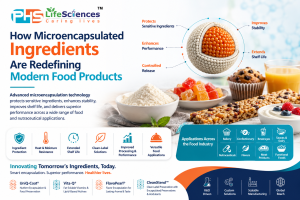
Microencapsulation provides a protective matrix around an active ingredient. For UniQ-Coat® Caffeine, the technical information identifies taste masking, gradual release and enhanced processing stability among the characteristics supported by its encapsulation system.
The listed encapsulating materials include hydrogenated palm oil, carnauba wax, GMS and a combination of carnauba wax and GMS.
The choice of formulation and encapsulation material should be considered alongside the intended dosage form, processing requirements and desired product characteristics.
Beyond Ingredients: Creating Market-Differentiated Products
Product development involves more than selecting individual ingredients. Understanding formulation considerations, ingredient functionality and product differentiation can help developers evaluate opportunities within the market.
Designation: Technical Manager, PHS Lifesciences Pvt. Ltd.
Date: 24 September 2026
The session will provide an opportunity to explore product development considerations beyond individual ingredients and understand how formulation decisions can contribute to differentiated product concepts.
Interested in learning more? Register for the webinar and connect with the PHS Lifesciences team.
Register for the WebinarSupplySide Global 2026
Meet PHS Lifesciences at one of the leading global events for the ingredient and formulation industry. Connect with our team to discuss microencapsulation technologies, formulation requirements and potential applications.
Why Consider UniQ-Coat® Caffeine?
For product developers evaluating caffeine ingredients, the selection process involves more than the active ingredient alone. Taste, release characteristics, processing conditions and dosage-form compatibility can all influence formulation decisions.
UniQ-Coat® Caffeine brings together several documented characteristics:
- Superior taste masking
- Smooth and sustained energy release
- Enhanced processing stability
- Formulation versatility
- Gradual release characteristics intended to support gastrointestinal comfort
The caffeine release study provides additional information about the measured dissolution and percentage release profile of encapsulated caffeine over time.
Together, these characteristics provide a technical basis for evaluating UniQ-Coat® Caffeine in suitable product development applications.
Frequently Asked Questions
1. What is UniQ-Coat® Caffeine?
2. What are the key benefits of UniQ-Coat® Caffeine?
3. Which dosage forms are compatible with UniQ-Coat® Caffeine?
4. Which materials are used for encapsulation?
5. Does UniQ-Coat® Caffeine have release study data?
6. Is technical documentation available?
Conclusion
UniQ-Coat® Caffeine is a microencapsulated caffeine ingredient designed to address formulation considerations such as bitterness, release characteristics and processing stability.
Its documented compatibility with tablets, capsules, functional beverages, powders and chewables makes it relevant for evaluation across multiple product formats. The supplied release study data and technical information can support an initial assessment of its characteristics during formulation development.
For application-specific suitability, processing compatibility and technical documentation, consult the product’s current technical information and the PHS Lifesciences team.