Beyond Potency: Smarter Delivery of Microencapsulated Fat-Soluble Vitamins
Consumers today expect more from nutraceuticals than simply meeting a label claim. They look for products that are consistent, convenient, and capable of maintaining quality throughout their shelf life. For manufacturers, this means developing formulations that not only contain the right nutrients but also ensure those nutrients remain stable during processing, storage, and consumption. Microencapsulated Fat-Soluble Vitamins have emerged as an effective solution for maintaining ingredient stability and supporting consistent product performance. When it comes to fat-soluble vitamins, achieving this balance is often more challenging than it appears.
Vitamins A, D, E, and K play essential roles in human health and are widely used in dietary supplements, functional foods, fortified beverages, gummies, and medical nutrition products. However, these vitamins are naturally sensitive to environmental conditions such as heat, oxygen, moisture, and light. During manufacturing and storage, these factors can affect ingredient stability and create formulation challenges. Microencapsulated Fat-Soluble Vitamins help protect these sensitive nutrients from environmental stress while improving formulation stability.
This is where advanced delivery technologies become increasingly important. Rather than focusing solely on vitamin potency, modern product developers evaluate how well an ingredient performs throughout its entire lifecycle—from manufacturing to the finished product. Microencapsulated Fat-Soluble Vitamins have emerged as one of the most effective approaches for protecting sensitive nutrients while improving formulation performance, handling, and shelf-life stability.
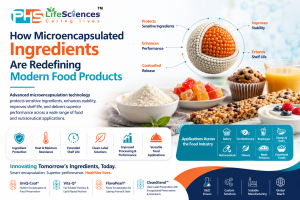
According to the PHS Life Sciences corporate presentation, the company’s Vita-Q® Technology produces uniform microencapsulated beadlets for Microencapsulated Fat-Soluble Vitamins that are designed to provide protection against oxidation, heat, moisture, and light while remaining water-soluble for nutraceutical and food applications.
Why Fat-Soluble Vitamins Present Formulation Challenges
Unlike water-soluble vitamins, fat-soluble vitamins dissolve in lipids rather than water. While this property makes them biologically important, it also introduces several formulation complexities.
Throughout manufacturing, transportation, and storage, vitamin ingredients may be exposed to:
- Heat during processing
- Moisture during storage
- Oxygen from the surrounding environment
- Light exposure
- Interactions with minerals and other active ingredients
These conditions can influence ingredient stability and processing performance. For formulators, the challenge extends beyond selecting the correct vitamin source. They must also ensure that the ingredient remains compatible with the intended dosage form and manufacturing process.
For example, a vitamin ingredient used in a tablet formulation may face very different processing conditions compared to one intended for a fortified beverage or gummy supplement. Each application requires careful consideration of stability, handling, and formulation compatibility.
Why Potency Alone Is No Longer Enough
Historically, manufacturers often evaluated vitamin ingredients primarily by their declared potency. While potency remains important, today’s formulation scientists recognize that it represents only one aspect of ingredient performance.
A vitamin with a high assay value may still encounter stability issues if it is exposed to adverse manufacturing conditions. As a result, modern product development focuses on additional parameters such as:
- Stability during processing
- Compatibility with other ingredients
- Powder flow characteristics
- Moisture resistance
- Oxidation protection
- Shelf-life performance
- Ease of incorporation into different dosage forms
These factors directly influence manufacturing efficiency and final product quality.
Instead of asking, “How potent is this vitamin?” manufacturers increasingly ask, “How will this ingredient perform throughout the entire product lifecycle?”
The Science Behind Microencapsulation
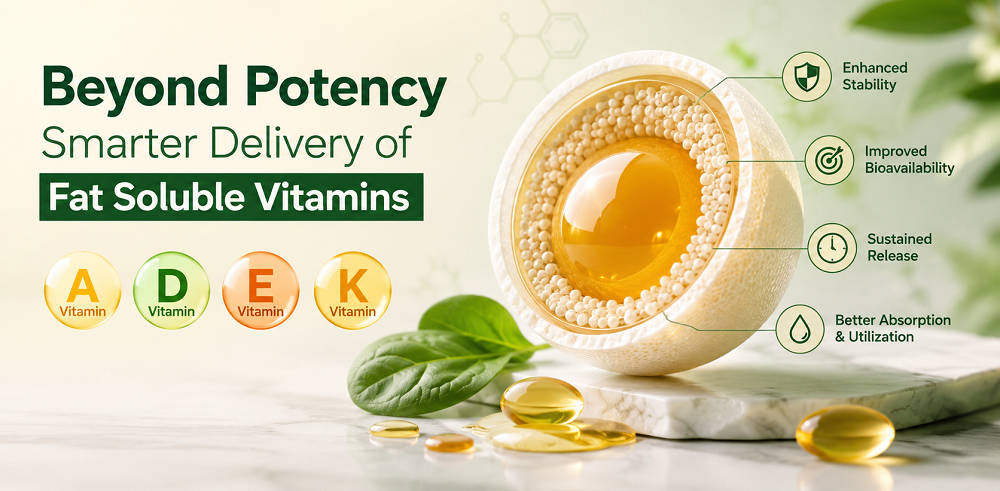
Microencapsulation is an advanced ingredient technology in which tiny particles of an active ingredient are surrounded by a protective coating.
This protective layer serves several purposes. It helps shield sensitive ingredients from external environmental conditions while improving their handling and compatibility during manufacturing.
Rather than leaving vitamins directly exposed to oxygen, moisture, or light, microencapsulation creates a physical barrier that helps maintain ingredient integrity.
The technology does not alter the nutritional identity of the vitamin itself. Instead, it focuses on improving the ingredient’s physical performance during formulation and storage.
How Microencapsulation Supports Better Vitamin Delivery
Microencapsulation offers several formulation advantages that make it increasingly valuable for nutraceutical manufacturers.
Enhanced Stability
One of the primary benefits of microencapsulation is improved protection against environmental stress.
The protective coating helps reduce exposure to:
- Oxygen
- Moisture
- Heat
- Light
This additional protection can contribute to improved ingredient stability throughout manufacturing and storage.
Better Powder Handling
Manufacturing efficiency depends heavily on ingredient handling characteristics.
Microencapsulated beadlets generally provide:
- Improved flowability
- Easier blending
- Better dosing consistency
- Reduced dust generation
These characteristics can simplify production while improving process consistency.
Reduced Ingredient Interactions
Modern nutraceutical formulations often combine multiple active ingredients within a single product.
These may include:
- Vitamins
- Minerals
- Botanical extracts
- Amino acids
- Probiotics
- Functional ingredients
Direct interactions between ingredients may influence formulation stability. Microencapsulation provides an additional protective barrier that can help reduce these interactions.
Greater Application Flexibility
Microencapsulated ingredients are suitable for numerous dosage formats, including:
- Tablets
- Capsules
- Gummies
- Powder premixes
- Functional beverages
- Meal replacement products
- Functional foods
This flexibility enables manufacturers to develop diverse product portfolios using similar ingredient technologies.
Understanding Vita-Q® Technology
To address the growing demand for advanced nutrient delivery, PHS Life Sciences has developed Vita-Q® Technology, a proprietary microencapsulation platform focused on fat-soluble vitamins and lipid-based active ingredients.
According to the company’s presentation, Vita-Q® produces water-soluble microencapsulated beadlets designed to provide protection against oxidation, heat, moisture, and light. The platform supports nutraceutical and food applications where ingredient stability and formulation performance are important.
The presentation also lists Vita-Q® products for:
- Vitamin A
- Vitamin D2
- Vitamin D3
- Vitamin K2
- DHA
- Astaxanthin
These products are intended for applications across dietary supplements, functional foods, and fortified beverages.
Applications Across Modern Nutraceuticals
As consumer preferences evolve, manufacturers are developing increasingly diverse nutritional products. Ingredient technologies must therefore support a broad range of formulations.
Dietary Supplements
Tablets and capsules remain among the most widely used dosage forms due to their convenience and manufacturing efficiency.
For these products, formulators prioritize:
- Uniform blending
- Stable ingredients
- Consistent quality
- Reliable processing performance
Gummies
Gummy supplements continue to experience strong market demand because of their taste and ease of consumption.
However, gummy manufacturing involves moisture and elevated processing temperatures, making ingredient stability particularly important.
Microencapsulated vitamins may help support formulation performance under these conditions.
Functional Beverages
Consumers increasingly seek beverages that provide added nutritional benefits.
Incorporating fat-soluble vitamins into water-based products presents unique formulation challenges. According to PHS Life Sciences, Vita-Q® technology produces water-soluble beadlets intended for such applications.
Functional Foods
Food manufacturers are expanding fortification across categories such as:
- Breakfast cereals
- Bakery products
- Protein bars
- Dairy alternatives
- Medical nutrition
- Meal replacements
Ingredient technologies that support stability and compatibility become increasingly valuable in these applications.
Choosing the Right Ingredient Partner
Selecting a vitamin ingredient supplier involves more than comparing specifications.
Manufacturers should evaluate:
- Technical expertise
- Product quality
- Manufacturing capability
- Regulatory support
- Application guidance
- Supply reliability
- Innovation capabilities
According to the PHS presentation, the company emphasizes customized application support, commercialization assistance, regulatory support, and scalable manufacturing alongside its technology platforms.
A supplier capable of supporting formulation development can help reduce development time and improve manufacturing efficiency.
Future Trends in Vitamin Delivery
The nutraceutical industry continues to move toward smarter ingredient technologies that support both manufacturers and consumers.
Several trends are expected to shape the future of vitamin delivery:
- Greater use of functional foods
- Expansion of gummy supplements
- Personalized nutrition
- Clean-label product development
- Advanced encapsulation technologies
- Innovative nutrient delivery systems
- Increased focus on formulation performance
Rather than simply increasing vitamin potency, manufacturers are investing in technologies that help ingredients perform consistently throughout processing and storage.
Conclusion
The future of nutraceutical innovation extends beyond potency. Today’s manufacturers require vitamin ingredients that deliver consistent formulation performance while supporting modern production processes and diverse dosage formats.
Microencapsulated Fat-Soluble Vitamins represent an important advancement in achieving these objectives by helping protect sensitive vitamins from environmental stress while improving handling, compatibility, and application flexibility.
As highlighted in the PHS Life Sciences corporate presentation, Vita-Q® Technology has been developed to produce water-soluble, highly stable microencapsulated beadlets for fat-soluble vitamins and other lipid-based actives used in nutraceutical and food applications. Combined with the company’s focus on customized solutions, technical support, and scalable manufacturing, this technology reflects the industry’s continued shift toward smarter nutrient delivery systems.
For nutraceutical manufacturers, the question is no longer simply “Which vitamin should we use?” It is increasingly “Which delivery technology will help our formulation perform consistently from production to the consumer?” That shift—from potency alone to comprehensive ingredient performance—is shaping the next generation of nutritional products.