Food manufacturers today are expected to deliver products that offer more than taste and convenience. Consumers increasingly seek foods that are nutritious, clean-label, longer-lasting, and consistent in quality. At the same time, manufacturers face the challenge of preserving sensitive ingredients throughout processing, transportation, and storage without compromising product performance. This is where microencapsulated ingredients are transforming modern food formulation.
Microencapsulation is no longer limited to pharmaceutical applications. It has become an important technology in the food and nutraceutical industries, enabling manufacturers to protect sensitive ingredients such as vitamins, flavors, preservatives, acids, and specialty nutrients. By surrounding these ingredients with a protective coating, microencapsulation helps improve stability, handling, and application performance across a wide range of food products.
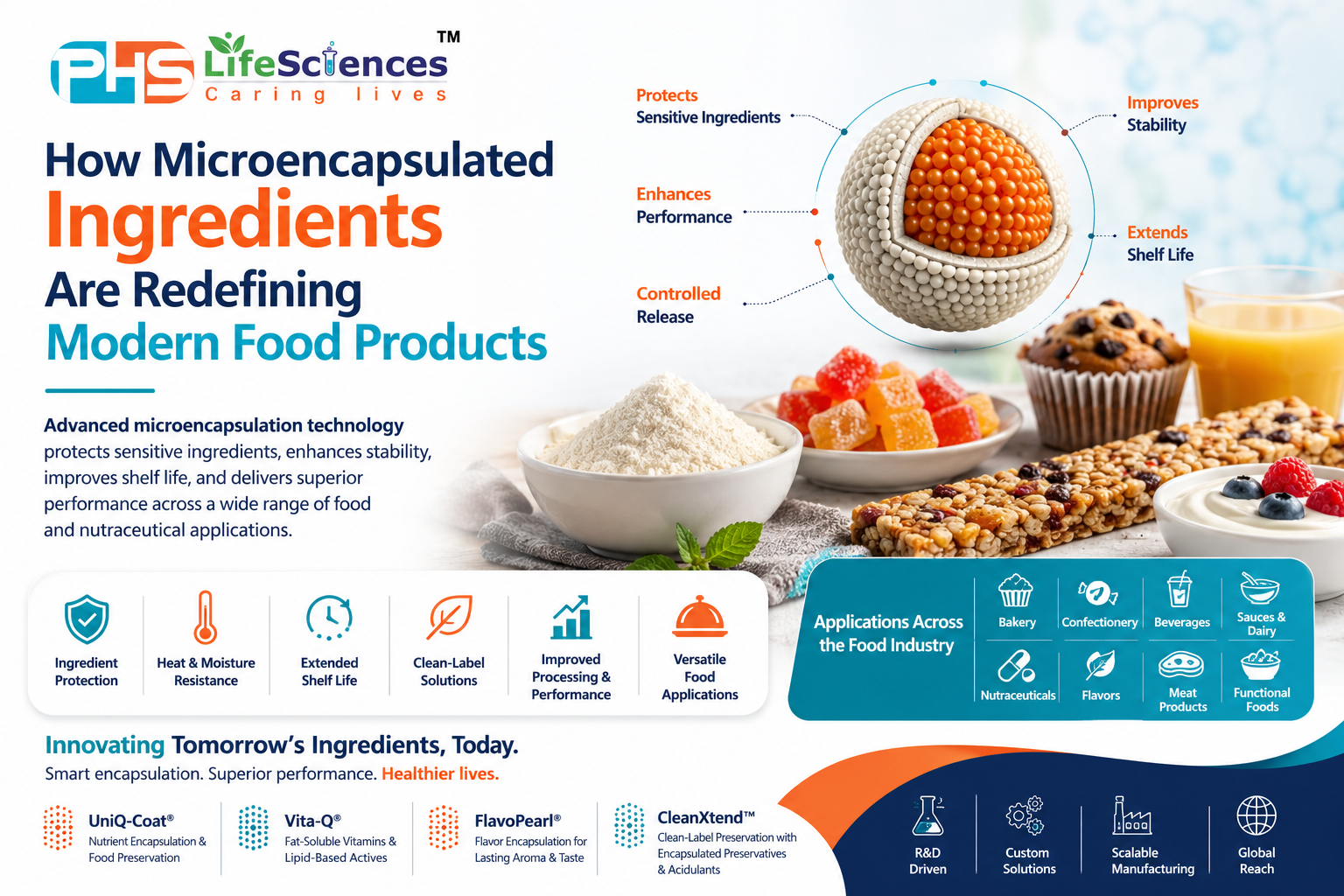
According to the PHS Life Sciences corporate presentation, the company has developed multiple proprietary microencapsulation platforms—UniQ-Coat®, Vita-Q®, FlavoPearl®, and CleanXtend™—to address different formulation challenges across nutraceuticals, bakery, confectionery, beverages, meat products, and food preservation. These technologies are designed to provide customized solutions for ingredient protection and controlled functionality in food applications.
As consumer expectations evolve and food formulations become increasingly complex, microencapsulated ingredients are helping manufacturers create products that are more stable, more efficient to manufacture, and better suited to today’s competitive market.
What Are Microencapsulated Ingredients?
Quick Answer: Microencapsulated ingredients are active food or nutraceutical ingredients enclosed within a protective coating. This coating helps shield the ingredient from environmental conditions such as heat, moisture, oxygen, and light while supporting improved handling and formulation performance.
Think of microencapsulation as providing each ingredient with its own protective shell. Instead of leaving sensitive materials directly exposed during manufacturing, storage, or transportation, the encapsulation layer acts as a barrier that helps maintain ingredient integrity until it reaches its intended application.
Depending on the formulation objective, microencapsulation can support:
- Ingredient stability
- Improved powder flow
- Reduced ingredient interactions
- Better processing compatibility
- Enhanced shelf-life performance
- Controlled release under specific conditions
Rather than changing the functionality of an ingredient, the technology focuses on protecting it throughout the product lifecycle.
Why Modern Food Products Need Better Ingredient Protection
Quick Summary: Modern food products contain increasingly sensitive ingredients that must remain stable throughout processing and storage. Microencapsulation provides an effective way to protect these ingredients while supporting manufacturing efficiency and product quality.
Today’s food formulations are significantly more sophisticated than they were a decade ago. Consumers demand products that combine nutrition, taste, convenience, and clean-label positioning—all while maintaining consistent quality.
Manufacturers are now incorporating a broad range of functional ingredients into everyday foods, including:
- Vitamins
- Natural flavors
- Plant extracts
- Organic acids
- Natural preservatives
- Antioxidants
- Omega fatty acids
- Specialty nutrients
Many of these ingredients are highly sensitive to environmental conditions.
Without appropriate protection, they may encounter challenges during:
- High-temperature processing
- Long production cycles
- Exposure to oxygen
- Humid storage environments
- Mechanical mixing
- Transportation
- Extended shelf life
As formulations become more advanced, ingredient technology plays an increasingly important role in supporting overall product performance.
Common Challenges in Food Ingredient Formulation
Developing innovative food products involves balancing multiple technical requirements simultaneously. Manufacturers must ensure that ingredients perform consistently from production through consumption.
Some of the most common formulation challenges include:
Heat Sensitivity
Processes such as baking, drying, roasting, blending, and extrusion may expose ingredients to elevated temperatures.
Heat-sensitive ingredients can experience degradation if they are insufficiently protected during manufacturing.
Moisture Exposure
Humidity remains one of the most significant challenges in food manufacturing.
Ingredients stored in powder form may absorb moisture, affecting their stability, flowability, or compatibility with other ingredients.
Oxidation
Exposure to oxygen can influence the stability of certain nutrients, flavors, and bioactive compounds over time.
Reducing oxidation is particularly important for ingredients intended for products with extended shelf-life expectations.
Ingredient Interactions
Modern formulations frequently combine numerous active ingredients within a single product.
Examples include:
- Vitamins
- Minerals
- Organic acids
- Botanical extracts
- Natural flavors
- Sweeteners
- Functional proteins
These ingredients may interact with one another under certain formulation conditions, making compatibility an important consideration during product development.
Shelf-Life Expectations
Consumers expect products to remain consistent throughout their intended shelf life.
Manufacturers therefore require ingredient technologies that help support product quality during storage and distribution.
How Microencapsulation Works
Quick Summary: Microencapsulation surrounds an ingredient with a carefully engineered protective coating that shields it from external environmental conditions while maintaining its intended functionality within the formulation.
Although encapsulation technologies vary depending on the application, the underlying objective remains consistent: protect the active ingredient until it performs its intended role.
The general process involves:
- Selecting the active ingredient.
- Applying a protective coating using specialized encapsulation technology.
- Producing free-flowing particles or beadlets.
- Incorporating the encapsulated ingredient into the desired food or nutraceutical formulation.
The protective coating serves as a barrier against environmental stress while improving ingredient handling during manufacturing.
Key Benefits of Microencapsulated Ingredients
Food manufacturers increasingly choose microencapsulated ingredients because they offer advantages beyond simple ingredient protection.
1. Improved Stability
Microencapsulation helps reduce exposure to:
- Heat
- Moisture
- Oxygen
- Light
This additional protection supports ingredient stability during manufacturing and storage.
2. Better Manufacturing Efficiency
Manufacturing teams benefit from ingredients that are easier to process.
Microencapsulated powders often provide:
- Improved flowability
- Easier weighing
- Uniform blending
- Reduced dust formation
- Better handling characteristics
These properties can contribute to more consistent production processes.
3. Enhanced Product Consistency
Uniform ingredient distribution is essential for maintaining product quality.
Microencapsulated ingredients are designed to support consistent incorporation into formulations, helping manufacturers achieve reliable batch-to-batch performance.
4. Reduced Ingredient Losses
Sensitive ingredients may be affected by harsh processing conditions.
Protective encapsulation helps reduce direct exposure to environmental stress, supporting more efficient use of valuable ingredients.
5. Greater Formulation Flexibility
Microencapsulated ingredients can be incorporated into a wide variety of food products, including:
- Bakery products
- Confectionery
- Functional beverages
- Nutritional powders
- Gummies
- Meal replacements
- Dairy alternatives
- Dietary supplements
This flexibility allows manufacturers to innovate across multiple product categories using advanced ingredient technologies.
Industries Benefiting from Microencapsulation
Microencapsulation is now used across multiple sectors of the food industry.
According to the PHS Life Sciences corporate presentation, the company’s technologies support applications in:
- Food and Nutrition
- Bakery
- Confectionery
- Flavors
- Beverages
- Nutraceuticals
- Meat Products
- Dietary Supplements
Each application has unique formulation requirements, and different encapsulation platforms are designed to address those specific needs.
PHS Life Sciences' Technology Platforms
Rather than relying on a single encapsulation solution, PHS Life Sciences has developed multiple proprietary technology platforms for different ingredient categories and food applications.

Applications of Microencapsulation Across the Food Industry
Microencapsulation is no longer viewed as a niche technology. It has become an integral part of modern food innovation, helping manufacturers overcome formulation challenges while meeting consumer expectations for quality, stability, and functionality.
Different food categories require different ingredient performance characteristics. A vitamin used in a gummy supplement has different processing requirements than a flavor used in tea or a preservative used in bakery products. Microencapsulation enables manufacturers to tailor ingredient performance according to the final application.
Bakery Products
Bakery products undergo high-temperature processing, making ingredient stability one of the biggest formulation challenges. Ingredients such as preservatives, acidulants, vitamins, and flavors may require protection during mixing and baking.
Microencapsulation helps food developers:
- Improve ingredient stability during baking
- Support controlled ingredient release
- Reduce premature ingredient interactions
- Maintain product consistency
According to the PHS Life Sciences presentation, the company’s UniQ-Coat® and CleanXtend™ technologies have been developed for bakery applications, including encapsulated preservatives and acidulants.
Confectionery
Confectionery products require precise flavor delivery, attractive sensory experiences, and long shelf life. Even slight ingredient degradation can influence taste and product consistency.
Microencapsulated ingredients can help support:
- Flavor retention
- Acid protection
- Uniform ingredient distribution
- Consistent sensory experience
The PHS presentation lists confectionery among the key application sectors supported by its encapsulation technologies.
Functional Beverages
Consumers increasingly prefer beverages that provide nutritional benefits alongside refreshment.
However, incorporating sensitive nutrients into beverages presents technical challenges due to water-based formulations and processing conditions.
Microencapsulation supports beverage manufacturers by helping improve:
- Ingredient dispersibility
- Stability during storage
- Protection from environmental stress
- Processing compatibility
According to the PHS corporate presentation, Vita-Q® technology produces water-soluble microencapsulated beadlets suitable for food and nutraceutical applications.
Nutraceuticals and Dietary Supplements
The global nutraceutical market continues to expand as consumers seek preventive healthcare and wellness products.
Manufacturers are developing increasingly sophisticated formulations containing:
- Vitamins
- Minerals
- Omega fatty acids
- Botanical extracts
- Specialty nutrients
Microencapsulation supports these formulations by helping protect sensitive ingredients while improving manufacturing efficiency.
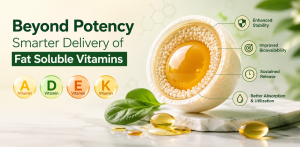
According to the PHS presentation, Vita-Q® products include microencapsulated Vitamin A, Vitamin D2, Vitamin D3, Vitamin K2, DHA, and Astaxanthin powders.
Flavor Applications
Flavor is one of the most important purchasing factors for consumers.
Unfortunately, many natural flavors are volatile and may be affected during processing or prolonged storage.
According to PHS Life Sciences, FlavoPearl® technology uses a unique low-temperature microencapsulation process designed to reduce flavor loss during manufacturing while preserving aroma until use. The presentation highlights applications including tea flavors such as ginger, lemon, cardamom, peppermint, bergamot, orange, lime, cinnamon, and basil.
Choosing the Right Microencapsulation Partner
Selecting the right ingredient supplier is just as important as selecting the right ingredient. A technology partner should offer more than a product catalogue—they should provide formulation expertise, technical guidance, and scalable manufacturing support.
When evaluating a microencapsulation partner, consider the following:
Technical Expertise
Look for a company with experience in encapsulating different classes of food ingredients and supporting a wide range of applications.
Research & Development
Innovation is essential in the food industry. A supplier with dedicated R&D capabilities is better positioned to develop customized solutions for evolving formulation challenges.
Manufacturing Capability
Reliable commercial-scale production helps ensure supply consistency as product demand grows.
According to the PHS corporate presentation, the company has a manufacturing capacity of more than 150 MT per month, a well-equipped R&D laboratory, and supplies customers globally.
Regulatory and Quality Support
Food manufacturers require ingredient suppliers that can provide documentation, regulatory guidance, and consistent quality standards.
The PHS presentation also highlights regulatory support and international quality standards as part of its technology platform.
The Future of Microencapsulated Ingredients
Food innovation is increasingly driven by ingredients that offer both functionality and manufacturing efficiency. As consumer expectations continue to evolve, manufacturers will require technologies that protect sensitive ingredients while supporting cleaner labels, longer shelf life, and more versatile formulations.
Several trends are shaping the future of microencapsulation:
- Clean-label food preservation
- Functional foods with targeted nutrition
- Personalized nutrition
- Fortified everyday foods
- Natural flavor preservation
- Sustainable ingredient technologies
- Multi-functional ingredient systems
- Advanced nutrient delivery platforms
Microencapsulation is expected to remain a key enabling technology as food manufacturers continue to innovate across these categories.
Why PHS Life Sciences Is Driving Innovation in Microencapsulation
Modern food manufacturers need more than ingredient suppliers—they need technology partners capable of solving formulation challenges through science and innovation.
According to the PHS Life Sciences corporate presentation, the company has developed a portfolio of proprietary microencapsulation technologies tailored to different application areas:
- UniQ-Coat® for nutrient encapsulation and food preservation
- Vita-Q® for fat-soluble vitamins and lipid-based actives
- FlavoPearl® for flavor encapsulation
- CleanXtend™ for clean-label preservation using encapsulated preservatives and acidulants
The presentation also highlights the company’s emphasis on customized application support, commercialization assistance, regulatory guidance, scalable manufacturing, and customer collaboration to develop application-specific solutions.
Conclusion
Microencapsulated ingredients are redefining how modern food products are developed, manufactured, and delivered to consumers. As formulations become more sophisticated, ingredient performance has become just as important as ingredient selection.
From protecting sensitive vitamins and preserving natural flavors to enabling clean-label preservation and supporting functional food innovation, microencapsulation helps manufacturers address many of today’s most pressing formulation challenges.
Rather than relying solely on conventional ingredients, food companies are increasingly adopting advanced encapsulation technologies that improve stability, compatibility, handling, and application flexibility across diverse product categories.
PHS Life Sciences reflects this evolution through its portfolio of proprietary technologies, including UniQ-Coat®, Vita-Q®, FlavoPearl®, and CleanXtend™, each designed to address specific food and nutraceutical formulation needs. Supported by in-house research, scalable manufacturing, and technical expertise, these platforms demonstrate how innovation in ingredient delivery can help manufacturers create higher-quality products for modern consumers.
As the food industry continues to prioritize quality, functionality, and consumer trust, microencapsulation is set to play an even greater role in shaping the next generation of food products—moving beyond ingredient protection to become a cornerstone of smarter, more resilient food formulation.