How Precision Encapsulation Supports Freshness, Processing Performance and Product Quality
Bakery shelf life is rarely extended simply by adding more preservatives. For bakery manufacturers, maintaining freshness, texture and overall product quality throughout production, distribution and storage requires a balanced approach to formulation, ingredient functionality and processing performance.
Bread and other yeast-based bakery products must maintain their intended quality throughout their commercial shelf life. At the same time, manufacturers need to consider how ingredients interact during mixing, dough development, fermentation and baking.
This creates a complex formulation challenge. An ingredient may provide the desired functionality, but the way it behaves inside the dough system can also influence processing performance and the characteristics of the finished product. Simply increasing the amount of an ingredient is therefore not always the most effective approach.
The objective is not only to extend product shelf life. It is to achieve the intended functionality while maintaining the processing and quality characteristics that matter to the manufacturer and the consumer. This is where precision encapsulation can provide an additional formulation approach.
UniQ-Coat® by PHS Lifesciences is a microencapsulation technology designed to support ingredient protection, stability and controlled functionality. For bakery applications, it provides a way to evaluate how selected ingredients can be protected and managed within a specific formulation.
The Bakery Shelf-Life Challenge
Bakery shelf life involves much more than preservation. A bakery product must perform successfully throughout its complete lifecycle, beginning with ingredient handling and dough preparation and continuing through processing, storage, distribution and final consumption.
During formulation development, manufacturers may need to balance several requirements at the same time. The product should meet its intended shelf-life objective while maintaining appropriate dough handling, processing consistency, taste, texture and overall sensory quality. In yeast-based products, ingredient compatibility and the timing of ingredient interactions can also be relevant considerations.
The challenge becomes particularly important when an active ingredient begins interacting with moisture, yeast or other formulation components before the intended stage of the process. Depending on the ingredient and application, premature interaction can influence how the formulation behaves during processing.
For this reason, shelf-life optimization should not be treated as an isolated objective. The most appropriate ingredient strategy needs to be considered within the complete bakery formulation and the actual conditions under which the product is manufactured.
Why Traditional Ingredient Addition Can Create Formulation Challenges
When an ingredient is added directly to a bakery formulation, it becomes immediately exposed to the surrounding system. Moisture, mixing conditions, yeast and other formulation components may influence how the ingredient behaves. In some applications, immediate interaction may be appropriate. In others, manufacturers may benefit from a more controlled approach.
Premature activity can create formulation challenges depending on the ingredient and product. It may affect ingredient stability, dough processing, formulation consistency or bakery shelf life. This is why increasing ingredient dosage alone does not always address the underlying formulation challenge.
A more precise approach considers not only which ingredient should be used, but also how that ingredient should perform within the system. Protecting selected actives and managing their interaction with the formulation can provide manufacturers with additional flexibility during product development.
How Precision Encapsulation Supports Bakery Formulations
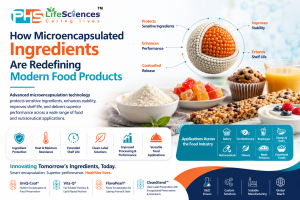
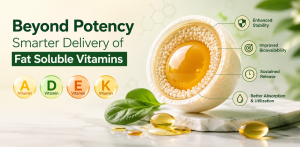
Precision encapsulation involves surrounding an active ingredient with a protective coating or matrix. The encapsulation system is designed to help protect the ingredient from premature exposure and manage its interaction with the surrounding formulation environment.
Depending on the ingredient, formulation and processing conditions, microencapsulation can help reduce premature interaction and provide a more controlled approach to ingredient functionality. The protective matrix may also support ingredient handling and formulation compatibility.
For bakery manufacturers, this changes the formulation conversation. Instead of focusing only on how much of an ingredient should be added, they can also consider how the ingredient behaves during processing and within the finished product. This approach can be particularly relevant when developing formulations with specific processing, quality and bakery shelf life requirements.
The exact performance of an encapsulated ingredient will depend on the ingredient itself, the coating system, dosage, formulation and processing conditions. Application-specific evaluation is therefore essential before drawing conclusions about performance outcomes.
How PHS Lifesciences Supports Bakery Manufacturers
PHS Lifesciences takes an application-focused approach to ingredient encapsulation. Bakery formulations can vary significantly in terms of product composition, processing conditions and intended bakery shelf life requirements. As a result, the same ingredient solution may not be equally suitable for every application.
The starting point is understanding the bakery application and the formulation requirement. This includes considering the type of product being developed, the ingredient requiring encapsulation, the processing environment and the intended performance objective. Factors such as dough composition, mixing and kneading conditions, fermentation and finished-product expectations can influence the suitability of an encapsulated ingredient.
Through UniQ-Coat® microencapsulation technology, PHS Lifesciences offers selected encapsulated ingredients for bakery applications. The purpose is to provide manufacturers with an additional approach to ingredient protection and controlled functionality rather than treating encapsulation as a one-size-fits-all solution.
The suitability of an encapsulated ingredient should always be evaluated in relation to the complete formulation. A bakery manufacturer may have different priorities depending on whether the objective is related to shelf life, ingredient stability, processing behaviour or the quality characteristics of the finished product. An application-focused approach helps ensure that these requirements are considered together.
Technical evaluation within the actual formulation and processing environment is an important part of determining whether a selected encapsulated ingredient is appropriate for the intended application. This allows manufacturers to assess ingredient functionality alongside processing performance, product quality and commercial shelf-life expectations.
UniQ-Coat® Encapsulated Ingredients for Bakery Applications
UniQ-Coat® is PHS Lifesciences’ microencapsulation technology designed to support ingredient protection, stability and controlled functionality.
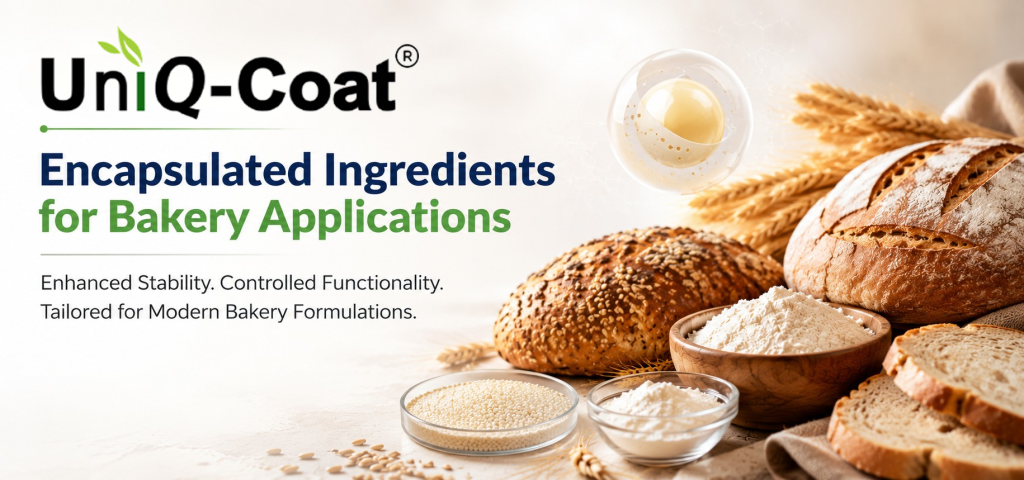
For bakery applications, the available ingredient range includes Encapsulated Sorbic Acid, Encapsulated Fumaric Acid, Encapsulated Citric Acid and Encapsulated Calcium Propionate.
Encapsulated Sorbic Acid
Sorbic acid is associated with preservation applications. Within a bakery formulation, encapsulation can help manage how the ingredient interacts with the surrounding system and provide a more controlled approach to ingredient functionality. Its suitability should be evaluated according to the specific formulation and processing requirements.
Encapsulated Fumaric Acid
Fumaric acid provides acidulant functionality in food formulations. Encapsulation can help manage premature interaction during processing and support application-specific ingredient performance. The final behaviour of the ingredient depends on the formulation and conditions in which it is used.
Encapsulated Citric Acid
Citric acid is widely used for acidulant functionality across food applications. Encapsulation can help optimize how the ingredient behaves within specific formulation and processing environments, particularly where premature interaction needs to be considered.
Encapsulated Calcium Propionate
Calcium propionate is commonly used in bakery preservation applications. Encapsulation provides a more controlled approach to ingredient handling and functionality. Application suitability should be assessed according to the product type, formulation and intended performance objective.
Key Benefits of Encapsulation in Bakery Formulations
The benefits of encapsulation in bakery applications are closely connected to how the technology helps manage ingredient behaviour. Rather than presenting multiple versions of the same claim, the key value of the approach can be understood through ingredient protection, controlled interaction, processing considerations and product quality.
One important objective is supporting shelf-life-focused formulation strategies. Encapsulation can help manufacturers explore ingredient functionality through a technology-based approach rather than relying solely on increased ingredient dosage. The objective is to achieve an appropriate balance between product longevity and the requirements of the overall formulation.
Encapsulation can also help manage ingredient interactions within the dough system. By creating a protective barrier around selected active ingredients, the technology can reduce premature exposure to the surrounding formulation environment. This can provide a more controlled approach when ingredient timing and compatibility are relevant.
For yeast-based bakery formulations, careful management of ingredient interactions may be particularly important. Encapsulation can support a formulation approach that considers how selected ingredients interact within the dough system, while recognising that the actual outcome depends on the complete formulation and processing conditions.
Product quality must remain central to any shelf-life strategy. A bakery product may meet a storage objective, but taste, texture and sensory characteristics are equally important to the finished product. Encapsulation can therefore be evaluated as part of a broader strategy that considers both ingredient functionality and the quality characteristics expected by consumers.
Processing performance is another consideration. Bakery products can involve intensive mixing and kneading, and selected ingredients may need to perform effectively within these conditions. A protective encapsulation matrix can support a more controlled approach to ingredient functionality, depending on the ingredient and application.
Applications for Encapsulated Bakery Ingredients
Encapsulated ingredient technology can be considered for selected bakery applications where the formulation and technical requirements are compatible with the ingredient solution. The current application focus includes bread, sandwich bread, buns and rolls, as well as other yeast-based bakery formulations.
Bread formulations can have specific requirements relating to processing, bakery shelf life and finished-product quality. Encapsulated ingredients can be evaluated according to these application-specific requirements rather than being treated as a universal solution.
Sandwich bread is often expected to maintain consistent quality throughout its intended commercial shelf life. The suitability of an encapsulated ingredient can therefore be assessed in relation to the complete formulation, processing conditions and finished-product expectations.
Buns and rolls may have different dough compositions, processing methods and storage requirements. An application-specific evaluation helps determine whether a selected encapsulated ingredient is compatible with the intended product.
Other yeast-based bakery formulations can also be considered based on the formulation requirements and technical suitability of the encapsulated ingredient. Pizza bases, bakery snacks and specialty bakery products are not included in this application list.
Choosing the Right Bakery Shelf-Life Solution
There is no single shelf-life solution that works identically across every bakery formulation. The product type, formulation composition and manufacturing conditions can all influence ingredient performance and bakery shelf life.
Manufacturers should first define the intended commercial shelf life of the finished product. Processing conditions such as mixing, kneading, fermentation and baking should also be considered because they can influence how an ingredient performs within the system.
Formulation compatibility is equally important. An ingredient should be evaluated within the complete formulation rather than in isolation. Its interaction with other ingredients and the overall dough system may influence the final result.
Taste, texture and sensory requirements should remain key considerations throughout development. Ingredient selection should also comply with applicable food regulations in the intended market. A technical and application-focused evaluation is therefore essential when selecting a bakery ingredient solution.
Frequently Asked Questions
How can bakery manufacturers extend shelf life without compromising quality?
Extending bakery shelf life requires a balanced approach to formulation, processing and ingredient functionality. Precision encapsulation can help manufacturers manage selected active ingredients while considering processing requirements and the quality characteristics of the finished product.
What are encapsulated bakery ingredients?
Encapsulated bakery ingredients are active ingredients surrounded by a protective coating or matrix. The technology can help protect selected ingredients and manage how they interact within a bakery formulation.
How does microencapsulation support bakery formulations?
Microencapsulation can help protect selected active ingredients from premature exposure and reduce unwanted interaction within a formulation. Depending on the ingredient and application, it can also support controlled functionality and processing performance.
Can encapsulation be used in yeast-based bakery formulations?
Encapsulation can support a more controlled approach to selected ingredient interactions in yeast-based bakery formulations. The specific outcome depends on the ingredient, dosage, formulation and processing conditions.
What bakery ingredients are available from PHS Lifesciences?
The UniQ-Coat® bakery ingredient range includes Encapsulated Sorbic Acid, Encapsulated Fumaric Acid, Encapsulated Citric Acid and Encapsulated Calcium Propionate. Application suitability should be evaluated according to the specific bakery formulation and technical requirements.
Looking to Optimize Your Bakery Formulation?
Extending bakery shelf life should not require compromising processing performance or finished-product quality. Manufacturers need ingredient solutions that consider the complete product journey—from formulation and processing to storage and final product expectations.
Connect with the PHS Lifesciences technical team to explore application-specific UniQ-Coat® encapsulated ingredient solutions for your bakery formulation.

Mr. Prabhakar Jadhav
Technical Manager, PHS LifeSciences Pvt. Ltd.
Mr. Prabhakar Jadhav is a technical professional with 13+ years of experience in product development and formulation. At PHS LifeSciences, he works on application-focused ingredient solutions and microencapsulation technologies, supporting the development of functional and performance-driven ingredient solutions.
His expertise spans product development, formulation, ingredient functionality and scale-up, with a focus on translating technical concepts into practical formulation solutions. He has also been involved in formulation research and scientific work, with experience in evaluating and developing innovative ingredient systems.
At PHS LifeSciences, his technical focus includes microencapsulation, ingredient stability, formulation compatibility, processing performance and application-specific product development.